Books Fractured Vows Saga Before The Fall · Book 1 The Savage Pulse · Book 2 Crimson Fever · Book 3 Reading Order Content Notes Audiobooks
Extras Visual Universe Trailers Moodboard Soundtrack The Long Drive Ancient Lore: Where the Songs Meet the Poems The Podcast Shades of Fractured Vows Join the ARC Team Where We Left Off Free Wallpapers Bonus Scenes Character Profiles Book Club Kit Watch on YouTube
About Bio Press Media Kit FAQs
More Newsletter Shop Events Contact
🛒 Buy Before The Fall 🛒 Buy The Savage Pulse ✦ Join Newsletter
A gold ring sinking just below a river surface at sunset with a fish turning toward it
KALIDASA · ABHIJNANASHAKUNTALAM

The Ring
in the Fish

The most famous play in Sanskrit is about a man who cannot recognise the woman he loves.

← ALL THE ANCIENT LORE

A man loses his memory of the woman he loved. She stands in front of him. He looks straight at her, and there is nothing there.

That is the second volume of the Fractured Vows Saga. It is also the plot of the most famous play ever written in Sanskrit, finished somewhere around fifteen hundred years ago by the same poet who gave me the Kumarasambhavam songs.

I am not going to pretend I invented that wound. It is one of the oldest in the language. What this page does is put the two side by side, honestly, and show you what Mahakavi Kalidasa did with it, because what he did with it is better than anything I will ever write.

Bhavana B

Not a retelling. Jimmy is not Dushyanta and Sofie is not Shakuntala. The saga is not a version of the play. Two stories reach for the same wound, one of them fifteen hundred years earlier and with more skill, and this page is about what happens when you set them next to each other.

Why this page exists

Because an amnesia story sounds like a soap opera until you find out where it comes from.

A man who cannot recognise the person he loves is not a cheap device invented for television. It is the engine of a play that Europe lost its mind over in the eighteenth century, that Goethe wrote a poem about, and that is still taught as the finest thing in classical Indian drama. The wound is old and serious, and the songs on my soundtrack about a man who cannot remember are reaching for the same thing the play reaches for.

This page is also a small protest. The last page I wrote was about chapters a teacher skipped. This one ends with a colonial administrator calling Indian literature impure and keeping this play out of schools. It keeps happening. It is worth noticing.

What happens in the play

The play is Abhijnanashakuntalam. The name means, roughly, the recognition of Shakuntala, and the word abhijnana carries the sense of a token, the thing by which someone is recognised. The title tells you the ending before the play starts. It also tells you that an object is going to matter.

King Dushyanta is out hunting and comes to the hermitage of the sage Kanva, who is away. There he sees Shakuntala. He courts her in royal style and marries her, and then leaves for his capital. Before he goes he gives her a ring, to be shown to him when she comes to his court to claim her place as queen.

Then the sage Durvasas arrives at the hermitage. He is famously short tempered. Shakuntala, lost in thought about her husband, does not attend to him. He curses her for it, and the curse does not fall on her. It falls on the man she is thinking about. Dushyanta will forget that she exists. The curse can be broken one way only, when she shows him the ring.

She sets out for the court. On the way she has to cross a river, and she dips her hand in the water, playing, and the ring slips off and is gone.

She reaches the court and stands in front of her husband, and he is unable to recognise the woman he married, and refuses to acknowledge her. The people who travelled with her leave her there and go back to the hermitage.

Later a fisherman cuts open a fish and finds a ring in its belly, and brings it to the court. The king sees it and it all comes back, and he understands exactly what he has done, and it is too late.

Years pass. He is sent to fight the Asuras for Indra and rewarded with a journey through the heavens, and on his way back to earth he comes upon Shakuntala and their son by chance, and knows them.

Things this page will not pretend about
  1. The older version has no ring. The story appears earlier in the Mahabharata, and there the recognition waits until their son Bharata is born, and the king finds the boy playing with lion cubs. The curse, the ring and the fish belong to the version this page is about.
  2. The saga was not built on this play. This page sets two stories beside each other. It does not claim one came out of the other, and nothing in the books is a scene from the play.
  3. The poet's dates are not known. As on the Kumarasambhavam page: he lived after the second century before the common era and before the year 634, and most scholars place him around the year 400. Anyone more confident than that is guessing.

The shape of it

Strip the play down and you get this.

A man and a woman belong to each other completely. Something outside them, which neither of them chose and neither of them deserved, takes her out of his head. Not her death. Not a quarrel. Not another woman. Just an absence where she used to be. And she is left holding the whole thing alone, standing in a room with the person she loves, being looked at by him as a stranger.

Notice who carries it. He is the one with the injury, and she is the one who suffers. He does not know enough to suffer. That asymmetry is the cruel genius of the plot, and it is why it is still being used fifteen centuries later.

And notice what fixes it. Not an argument. Not evidence. Not her telling him the story of their life, which she does, and which does not work. What fixes it is an object that carries the past in it, found inside a fish, by accident, far too late.

The songs

Four songs on the soundtrack live in that gap. Nobody wrote them from the play. They were written from the inside of the story, and then I looked up and found the play already standing there.

I Don't Remember You cover
ENGLISH · JIMMY

I Don't Remember You

This is Dushyanta in the fifth act, if anyone had thought to ask him how it felt.

They gave me back my name and not much else
Told me what I did told me where I lived
Nobody warned me about the woman in the doorway
Nobody told me what to do with my own hands

I don't remember you
But I miss you

The part the play leaves out

In the play we watch the king from outside. He is cold, he is correct, he turns her away, and the audience wants to shake him. The song goes round to his side of it and finds something the stage cannot show: there is a photograph of us I've looked at forty times. I'm looking at a stranger who's clearly very happy. I want to be him.

And the body remembers even when the head does not. You put your hand in mine and my hand already knew. My head's got nothing, nothing at all. My body's been keeping notes. That is the ring, relocated. The token that carries the past is not an object here. It is him.

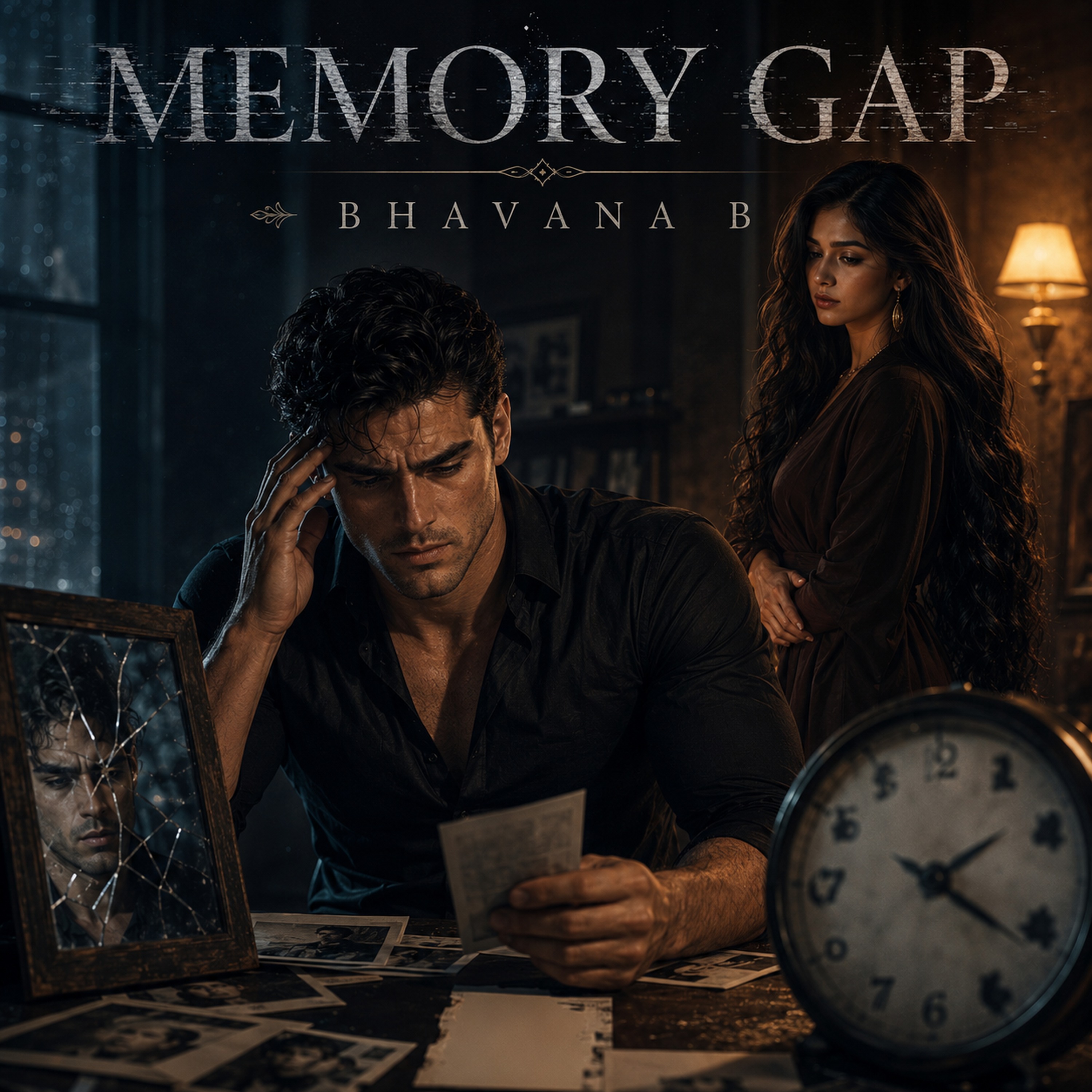
Memory Gap I cover
ENGLISH · JIMMY AND SOFIE

Memory Gap I

The curse, from the inside. He knows a piece is missing and he knows she is holding it.

There's a night I lost, and you won't say
A blank space sitting in my brain
You hold the part I'm missing
You watch me fall and listen

You stand still while I unravel
Like you're guarding something fragile

Where it differs from the play

Shakuntala has no choice. She tells him and is disbelieved. The woman in this song has a choice, and she is choosing silence, and the man can feel her choosing it. If you're the truth, then say it.

The play has a curse. This has a person. That is the harder version.

Teach Me The Words cover
ENGLISH · JIMMY

Teach Me The Words

If the ring is the thing that makes recognition possible, this song is a man asking to be handed one.

My hands knew where to go before my head could catch them up
They slowed down at your shoulder like they'd learned it touch by touch
Like my body kept the record and my memory never will

So don't tell me the story let me learn it off your skin
Put your hand back where it used to go and let the whole thing in

Teach me the words I still know the tune
Say my name slow and I'll come back to you

The quiet correction

In the play the proof is a thing. A signet ring, engraved, legal, the kind of object a court will accept. Shakuntala arrives without it and is turned away, because she is only a woman with a story.

This song throws the ring out. I don't need the names of nights, I don't need the dates or doors. No evidence, no document, no witnesses. Say it with your fingertips and I will understand it better.

Fifteen hundred years later, somebody finally believes her without the paperwork.

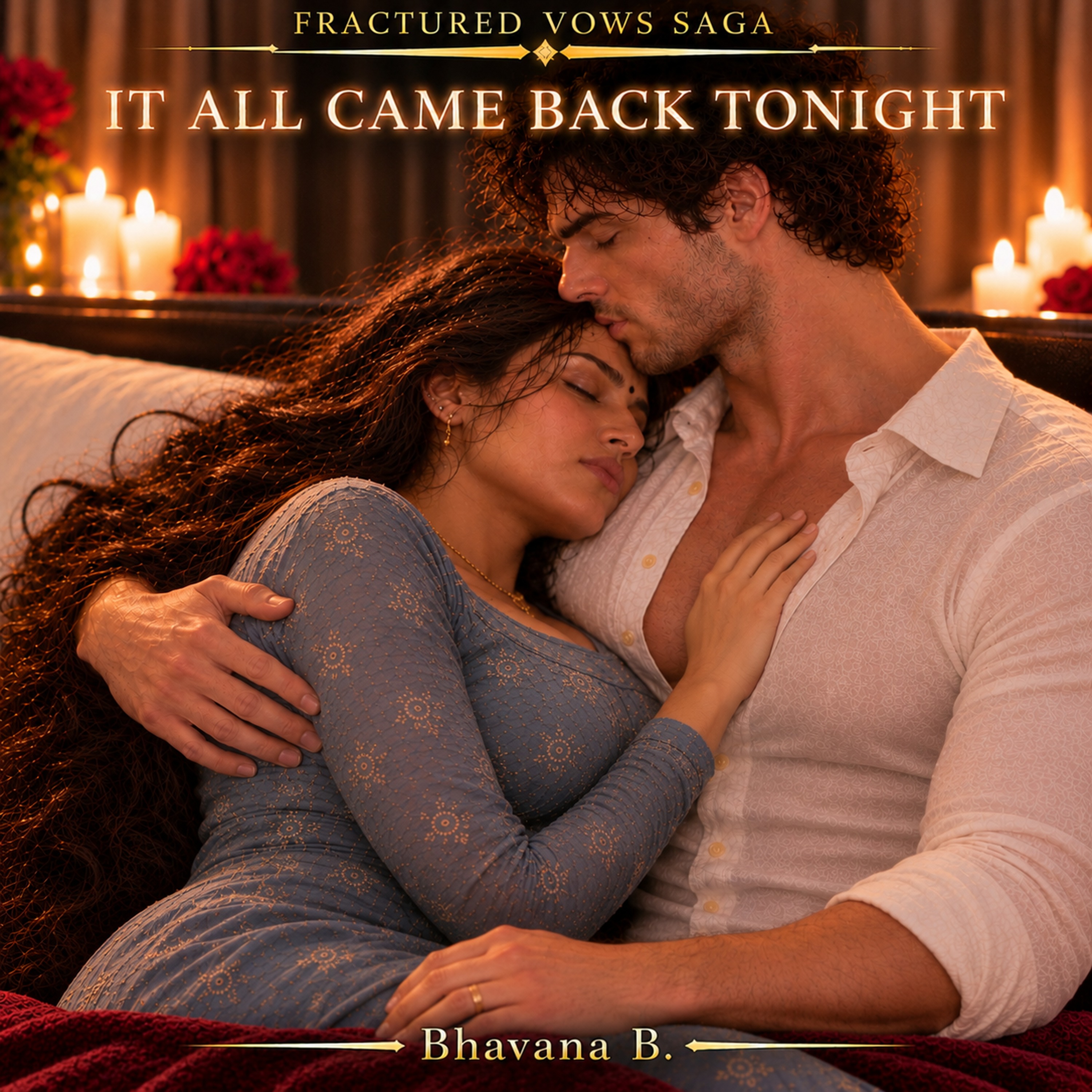
It All Came Back Tonight cover
ENGLISH · JIMMY

It All Came Back Tonight

The fisherman cuts the fish open. This is that moment, except nobody else in the room knows it happened.

Every room every hour I lost
Every year and every cost
Is lying here beside me now

It all came back tonight
Every touch every word every light
I know you now the way I always knew
And I'm not going to say a word to you

The ending the play does not have

When the ring reaches Dushyanta he collapses into it publicly. The court sees it. The audience sees it. The play gives him the full weight of what he has done, all at once, in front of everybody.

This man gets it back in the dark, with her asleep and her hand on his chest, and decides to say nothing. If I tell you now I'll watch you choose your words. I've watched you pick them for me and I know how that hurts.

And then the line that reverses the whole story: maybe this is what you felt, all the nights you held it to yourself. Holding something big enough to shake you, and keeping quiet so it wouldn't break you. He does not just remember her. He finally understands what she went through while he could not.

Shakuntala never gets that. Nobody in the play ever says to her, I know what that was like for you.

✦

The century it spent abroad

This is worth knowing, because people assume classical Indian literature is a local interest.

William Jones translated the play into English in 1789. It was the first Indian drama ever translated into a Western language. Over the following century there were at least forty six translations into twelve European languages.

Goethe published an epigram about it in 1791 that ends by saying everything is said if you name only Shakuntala. He also took a device from the play's prologue and used it in Faust. Schlegel published a German translation of the older Mahabharata version in 1808. Schubert worked on an opera from it. Gautier made a ballet.

A play about a man who cannot recognise his own wife went through Europe like weather.

And then they kept it out of schools

Here is the part that made me want to write this page.

Under the British Raj, this play was disapproved of as a text for Indian schools. Charles Trevelyan, who had a great deal to say about what Indians should read, described popular Indian literature as marked with the greatest immorality and impurity.

So the finest play in the language, the one Goethe wrote a poem about, was considered unsuitable for the children of the country that produced it.

My own Sanskrit teacher turned pages without telling us why. She was not the first person in that chain and she did not invent the habit. Somebody taught the teachers that some of this was not to be read, and it worked, and it was still working in a classroom in my lifetime.

That is two pages on this website now that end in the same place. A great poem, and somebody deciding you should not see all of it.

A last word

The thing I keep coming back to is the fish.

The poet could have had the ring turn up anywhere. In a drawer. In a road. Returned by a servant. He put it inside a fish, in a river, and made a fisherman cut it open, and a fisherman is about as far from a royal court as a person can be. The whole of a marriage is sitting in the stomach of a fish in a river while a queen is being turned away at a palace door.

He also knew what he was doing with time. The ring comes back too late to spare her anything. She has already stood in that room. She has already been looked at and not known. Finding out the truth does not undo the afternoon, and the play is honest enough to let the king live with that.

If you want the whole play, it is short, it is in print in a dozen good translations, and it is better than this page. Start at the hunt.

Where this page gets its facts

The plot of the play, the curse of Durvasas and its condition, the loss of the ring in the river, the scene at court, the fisherman and the fish, the reunion, the differences in the Mahabharata version, the Jones translation of 1789, the count of forty six translations in twelve European languages, Goethe's epigram and his use of the prologue in Faust, Schlegel, Schubert and Gautier, and the disapproval of the play as a school text under the Raj together with the quoted description of Indian literature, all come from the Wikipedia article on Shakuntala, the play. The poet's dates follow the same sources used on the Kumarasambhavam page.

Where a detail could not be confirmed it is not on this page. Where the saga and the play differ, the page says so rather than smoothing it over.

✦ ALL THE ANCIENT LORE ✦ SHAKTI 🎵 THE FULL SOUNDTRACK
✦ FIND ME
INSTAGRAM FACEBOOK YOUTUBE TIKTOK LINKEDIN X GOODREADS WHATSAPP NEWSLETTER