Books Fractured Vows Saga Before The Fall · Book 1 The Savage Pulse · Book 2 Crimson Fever · Book 3 Reading Order Content Notes Audiobooks
Extras Visual Universe Trailers Moodboard Soundtrack The Long Drive Ancient Lore: Where the Songs Meet the Poems The Podcast Shades of Fractured Vows Join the ARC Team Where We Left Off Free Wallpapers Bonus Scenes Character Profiles Book Club Kit Watch on YouTube
About Bio Press Media Kit FAQs
More Newsletter Shop Events Contact
🛒 Buy Before The Fall 🛒 Buy The Savage Pulse ✦ Join Newsletter
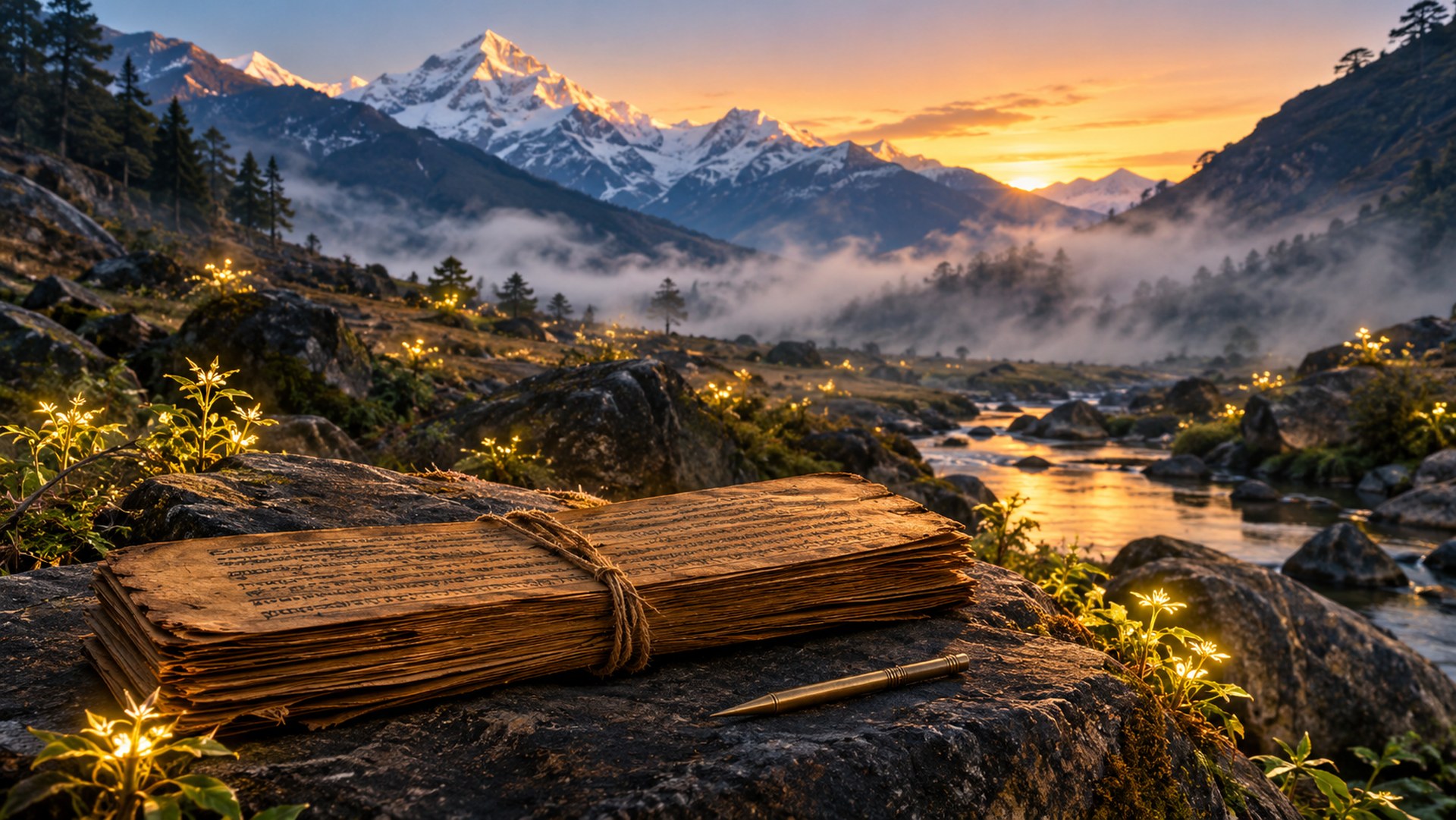
Himalayan valley before sunrise with an open palm leaf manuscript
ANCIENT LORE: WHERE THE SONGS MEET THE POEMS

What the Mountain's
Daughter Won

The canto my teacher skipped, the poet it made, and the songs the saga found a long way after both of them.

← ALL THE ANCIENT LORE

In high school, Sanskrit was one of the languages we had to take. We were reading Kumarasambhavam, and one day my teacher turned past a section without reading it. Then another. She never said why. She just moved on.

That is the surest way to make a room full of teenagers curious. What was in there?

Years later I found out. In the first canto, Mahakavi Kalidasa describes the goddess Parvati from her toes to the last strand of her hair. Her feet, her ankles, the three folds at her waist, the hollow of her navel, her throat, her eyes, her hair. There is a rule behind the order. A poet describes a human being from the head down. A god is described from the feet up. So the direction he chose is him telling you, without saying it, who she is.

And further on there is the wedding night, and then the birth of Kumara. Those are the pages that get left out of school editions. They were left out for us too.

I never forgot it. When I was older and could get hold of a translation, I read the whole thing. What stayed with me was not the parts my teacher skipped. It was Shiva. A god sitting in the snow with his eyes closed, who had lost everything and decided to want nothing again. A girl who comes and serves him anyway, and is looked straight through. He burns the god of love to ash for trying to force the moment. She does not force anything after that. She goes away and burns herself down instead, through her own penance, until there is nothing left of her but waiting. And at the end of it he puts down the disguise and says the line I have never gotten over: from this day I am your slave, bought by your penance.

That is not a love story about two people meeting. It is a love story about a man who had closed himself, and what it cost her to be seen.

I was writing lyrics one night, long after all of this, and the poet came back to me without warning. I was reaching for a way to say what Jimmy sees when he looks at Sofie, and what came was the old poet describing a goddess from the feet up. So I let him in. I wrote it that way in Telugu, then in Hindi, then in English, three different songs, because he would not say the same thing twice.

I loved writing them. When I finally tuned them, I loved them more. I hope you do too.

Bhavana B

These are not the gods. Jimmy is not Shiva and Sofie is not Parvati. Nothing on this page says otherwise. What the songs borrow is a poet's eye and the shape of an ache: a man who has closed himself, and a woman who will not stop. The poet got there about fifteen hundred years before I did.

Who was Mahakavi Kalidasa

Almost nothing. That is the honest first answer.

He is usually called the greatest writer India has produced in any age, and we do not know when he lived, where he lived, or what he did for a living. Classical Sanskrit writing is impersonal on purpose. The poet is not supposed to be in the poem, so he is not in it, and he left no account of himself.

What can be said with any firmness is narrow. He lived after the reign of Agnimitra, a king of the second century before the common era, because he wrote a play about that court. And he lived before the year 634, because an inscription from that year at Aihole already praises him as a famous poet. That is eight hundred years of room.

Inside that gap, most scholars put him at the court of Chandragupta the Second, somewhere around the year 400, in what is called the Gupta period. The argument is that his work fits that court so well. It is the most convincing guess available and it is still a guess, and anyone who tells you his dates with confidence is telling you more than is known.

There is a famous story that he was one of the nine gems at the court of a king called Vikramaditya in Ujjain. Several kings used that title, and the nine named men could not all have been alive at the same time, so the story is a story. Another tradition says he died in Sri Lanka. That is a tradition too.

Six works are accepted as his, and a seventh is likely. Three plays, two long poems, and one lyric:

  • Abhijnanashakuntalam, the play about King Dushyanta and Shakuntala, which is usually judged the finest thing written in India in any period. When it reached Europe in translation in the eighteenth century it astonished the people who read it.
  • Vikramorvashiyam, a mortal king in love with a woman of heaven, and a long passage of madness that nobody who has read it forgets.
  • Malavikagnimitram, a comedy of intrigue inside a palace.
  • Raghuvamsham, the long poem on the dynasty of Rama.
  • Kumarasambhavam, this one.
  • Meghadutam, the Cloud Messenger, in which an exiled man asks a passing cloud to carry a message to his wife, and spends the poem describing the whole of northern India to it so it will not lose its way. It is a thousand six hundred years old and it is still the best thing ever written about missing somebody.
  • Ritusamharam, the six seasons, which is probably his and is argued about.

His name means servant of Kali, so he was most likely a devotee of that goddess, though he praises Vishnu too, warmly, in more than one place. Beyond that, a reader meets him only where every reader has met him for fifteen hundred years, which is in the lines.

And what is in the lines is somebody who watched very carefully. A doe closing its eyes at a touch. The gap between two things being too small for a thread of lotus stalk. A bee following its mate to the same flower. A cloud that has to be given directions. He is famous for love poetry, but the love poetry works because the looking is exact.

What Kumarasambhavam is

Kumarasambhavam, The Birth of Kumara, is a long poem in Sanskrit by the poet. Nobody knows exactly when he lived. It is usually counted as the finest kavya in classical Sanskrit, and unusually for an epic, the mood that runs it is not heroism but love.

The story, in eight cantos:

  • One. Parvati is born to Himalaya, king of the mountains. The sage Narada says she will win Shiva. The poet describes her from her feet to her hair.
  • Two. The gods are being destroyed by the demon Taraka. They go to Brahma, who tells them only a son of Shiva can end it. But Shiva has lost Sati and sits in the snow with his eyes shut.
  • Three. Kama, the god of desire, is sent to break the meditation, and brings spring with him out of season. Shiva opens his third eye and burns him to ash.
  • Four. Rati, Kama's wife, laments over the ashes and prepares to burn herself with him. A voice from the sky stops her and promises he will be restored after Shiva's marriage.
  • Five. Parvati gives up her beauty and performs terrible penance. Shiva comes to her disguised as an ascetic and mocks himself to test her. She defends him. He drops the disguise.
  • Six. Shiva sends the seven sages to ask her father for her hand. Himalaya agrees. A date is set.
  • Seven. The wedding. The preparations, the procession, the ceremony.
  • Eight. Their union. The canto my teacher skipped.
Three things this page will not pretend about
  1. The birth of Kumara is not in the part scholars accept as the poet's. Most editions carry cantos nine to seventeen, which tell of Kumara's birth and his defeat of Taraka. Most scholars do not believe the poet wrote them. The poem called The Birth of Kumara ends, in the text we can trust, before Kumara is born.
  2. The curse is a story. It is said that Parvati cursed the poet for writing the eighth canto, and that this is why the poem was never finished. It is a legend, repeated for centuries. It is not a fact, and this page does not treat it as one. It does make a very good song.
  3. The eighth canto has been argued over for a very long time. Moralists objected to a poet describing the union of the parents of the universe. Some editions leave it out, especially ones printed for students. Others defended it, and one commentator called the hesitation to write about it foolish. The argument is older than the objection I grew up with.

How to read the song notes

Under each song there are three kinds of note, and they are kept apart on purpose.

  • Mahakavi Kalidasa wrote A verse from the poem, with its canto and number, so you can go and look. The Sanskrit here is quoted from the text, not from memory.
  • Changed Where the song and the verse are close but not the same. These are the interesting ones.
  • Mine Lines with no verse under them at all.

The translations are literal, line for line, not singable. They are there so you can hear what the Telugu and the Hindi are doing.

Canto One The description

The poet describes Parvati from her feet upward, verses thirty three to forty nine. Feet, legs, thighs, waist, navel, breast, arms, neck, face, voice, eyes, eyebrows, hair. The commentary gives the reason for the direction: poets describe gods from the foot to the head, and human beings from the head to the foot. The order is the claim.

Three songs came out of that passage, one in each language, and they do not share a single image between them.

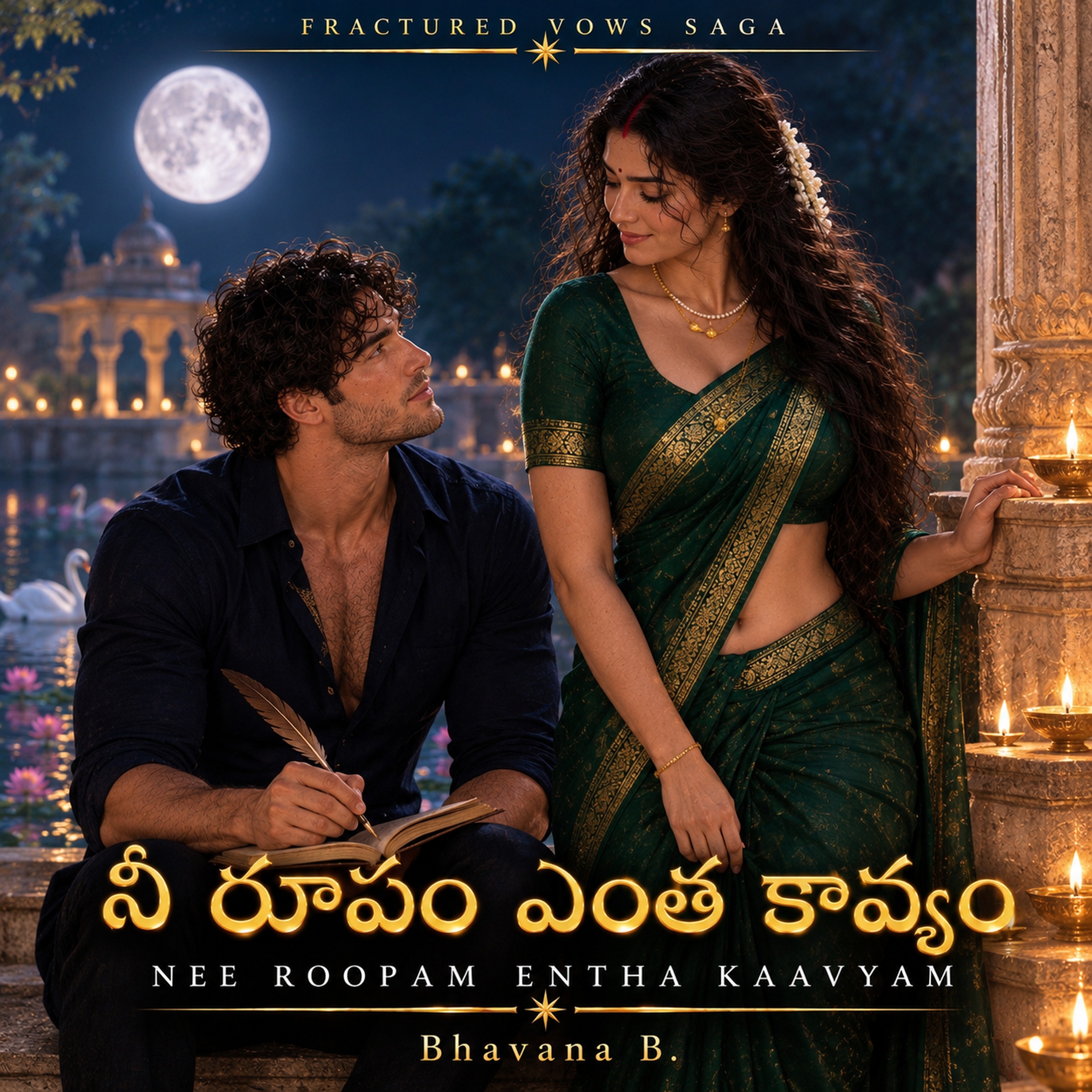
Nee Roopam Entha Kaavyam cover
TELUGU · CANTO ONE · JIMMY

ನీ రొనం ఎంత కావ్యం
Nee Roopam Entha Kaavyam

He asks the poet's soul to come into him for one night, and then climbs her the way the poem does.

Ninnu Parvathitho polchakunda undalenuI cannot keep from comparing you to Parvati
Aa Kalidasu aathma ee raathriki naalo cheraniLet Kalidasa's soul enter me for this one night
Chandrudu pagatiki raadu thaamara raathiri viriyaduThe moon does not come by day, the lotus does not open at night
Aa rendu andaaloo nee momulo okkatai navvaayiThose two beauties became one in your face and laughed
Nee gonthu vinnaaka koyila koothalu koodaAfter hearing your voice, even the koel's call
Theega thappina veenalaa naa cheviki vinipinchaayisounded to my ear like a veena with a slipped string
Nee roopam entha kaavyamWhat a poem your form is
Nee nadumu entha shlokamWhat a shloka your waist is
Kalidasu naalo cheritheIf Kalidasa enters me
Nuvve naa Kumarasambhavamyou are my Kumarasambhavam
Chigurutaaku meeda puvvu virisinattu undiIt is like a flower opening on a new leaf
Nee errani pedavi meeda aa navvu entha muddugundihow lovely that smile is on your red lips
Bedirina ledi nee choopunu aruvu thechchukundoDid the startled doe borrow its glance from you
Nee choope aa ledi daggara nerchukundoor did your glance learn it from the doe
Nee nadumu madathallo moodu metlu chekkaaduIn the folds of your waist he carved three steps
Manmathudu ekkadaanikenani aa kavi cheppaadufor Manmatha to climb, the poet said
Nee naabhi daggara modalayye aa sannani neeli rekhaThat fine blue line beginning at your navel
Naa choopuki adi daari naa manasuki adi lekhais a road for my eyes and a letter to my heart
Tholi vaana chinuku nee reppala meeda okka kshanam aagindiThe first raindrop paused one moment on your eyelashes
Nee pedavini thaaki nee edapai chitli chedirinditouched your lip, broke and scattered on your chest
Nee nadumu madathallo thadabaduthu jaarindistumbled and slipped through the folds of your waist
Chivaraku nee naabhilo daakkundiand hid at last in your navel
Thaamara thoodu daaram kooda dooralenantha daggaragaSo close that not even a lotus stalk thread could pass
Nee edapongula naduma naa oopirike chotu ledubetween them there is no room even for my breath
Nee nadaka nerchukovaalani raajahamsalu venta vastheWhen the royal swans follow to learn your walk
Nee paadaala gajjelaku aa hamsalake nadaka raaduthe swans cannot match the anklets on your feet
Aa mahaakavi enimido sarga daggare aagipoyaadataThey say the great poet stopped at the eighth canto
Ammavaari shaapamo athani bhayamoWhether the goddess cursed him or he was afraid
Naaku ae shaapamaina raaniLet any curse come to me
Nenu maathram enimido sarga daggara aaganuI will not stop at the eighth canto
Kavithvam naaku raadu kaani nuvvu naa kaavyamI have no gift for poetry but you are my poem
Prathi vampuki oka shlokam raase ee raathri naa bhaagyamTo write a shloka for every curve is my fortune tonight
Ae shaapam vachchina adi naaku varame avuthundiWhatever curse comes will become a boon to me
Ninnu varninche prathi kshanam naa janma dhanyamavuthundiEvery moment I describe you, my birth is made worthwhile
Mahakavi Kalidasa wrote Canto 1, verse 39

मध्येन सा वेदिविलग्नमध्या वलित्रयं चारु बभार बाला

madhyena sa vedivilagnamadhya valitrayam caru babhara bala

The girl, her waist slender as an altar, bore three lovely folds, a staircase made by youth for Kama to climb.

My line, in the folds of your waist he carved three steps for Manmatha to climb, the poet said, is almost a translation. I even credit him inside the lyric.

Mahakavi Kalidasa wrote Canto 1, verse 38

तस्याः प्रविष्टा नतनाभिरन्ध्रं रराज तन्वी नवलोमराजिः

tasyah pravishta natanabhirandhram raraja tanvi navalomarajih

The fine new line entering the hollow of her navel shone like sapphires set in her girdle.

The poet's word for the shine is the blue stone. The song keeps the blue: aa sannani neeli rekha, that fine blue line.

Mahakavi Kalidasa wrote Canto 1, verse 46

प्रवातनीलोत्पलनिर्विशेषमधीरविप्रेक्षितमायताक्ष्या

pravatanilotpalanirvishesham adhiraviprekshitam ayatakshya

The glance of the long eyed one, unsteady, is no different from blue lotuses swaying in the wind. It cannot be settled whether the doe eyed creatures learned that look from her, or she from them.

He asks the question and leaves it open. So does she. Neither of them answers it.

Mahakavi Kalidasa wrote Canto 1, verse 40

mrinalasutrantaram apy alabhyam

Not even the space of a lotus stalk thread is to be had between them.

My thaamara thoodu daaram kooda dooralenantha daggaraga is a close rendering of the same image.

Changed Canto 1, verse 34

vyaniyata pratyupadesalubdhair aditsubhir nupurasinjitani

The royal swans, greedy for a lesson in return, taught her their walk, wanting the jingling of her anklets.

In the poem it is a trade. The swans give her their gait and take her anklet sound as the fee. In the song the swans follow her to learn and simply lose. The image is his. The outcome is mine.

Mine

The raindrop that pauses on her lashes, touches her lip, scatters on her chest, stumbles through the folds at her waist and hides in her navel is not in Kumarasambhavam. It travels the same route the poem travels, in reverse, in the body of one drop of water. It is the best thing in the song and the poet never wrote it.

The last verse

Nenu maathram enimido sarga daggara aaganu. I will not stop at the eighth canto.

Those pages were skipped for us at school. Years later I wrote a song that tells the poet, out loud, let the curse come, I am not stopping where you stopped. Then I went and wrote the eighth canto. It is further down this page.

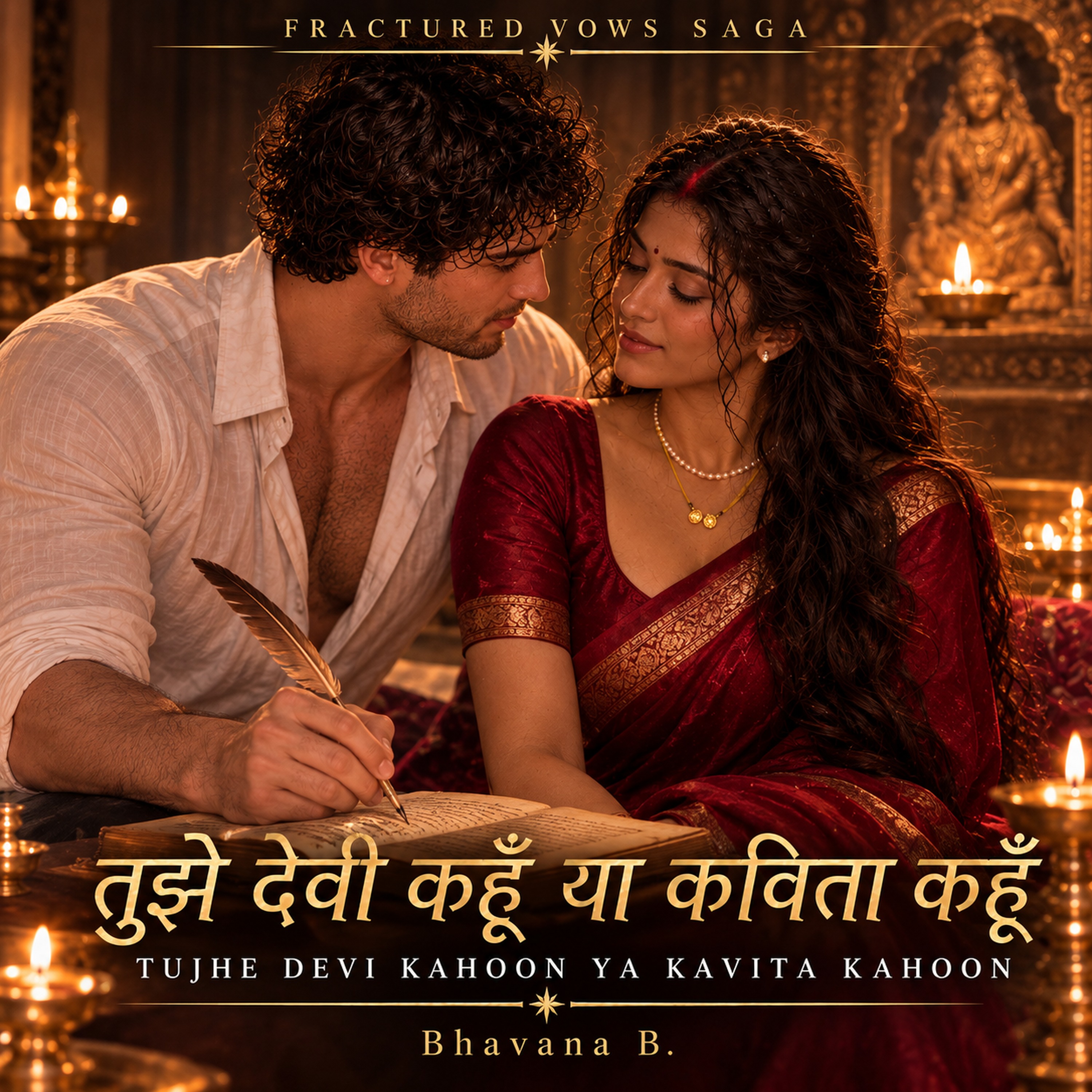
Tujhe Devi Kahoon Ya Kavita Kahoon cover
HINDI · CANTO ONE · JIMMY

Tujhe Devi Kahoon Ya Kavita Kahoon

The same canto in Hindi, and not one image repeated from the Telugu. This one keeps asking what she is. A goddess, or a poem.

Tujhe Parvati se na milaoon ye mujhse na hogaNot to compare you with Parvati, that I cannot do
Aaj ki raat Kalidas ki aatma mujhmein utar aayeTonight let Kalidasa's soul come down into me
Teri bhauhon ka ye tedha sa kamaanThis curved bow of your eyebrows
Dekh ke Kamdev bhool gaya apna abhimaanseeing it, Kamadeva forgot his own pride
Teri baahein shirish ke phoolon se bhi komalYour arms are softer even than shirisha flowers
Chhoo loon to darr lage na chhooon to man bekalI am afraid to touch them, restless if I do not
Tujhe devi kahoon ya kavita kahoonShall I call you a goddess or call you a poem
Kalidas ban ke tujhe padhta rahoonLet me become Kalidasa and keep reading you
Tera roop hi mera KumarasambhavaYour form itself is my Kumarasambhava
Har ang pe ek shlok likhta rahoonLet me keep writing one shloka on every limb
Pake bimbaphal se laal tere honthYour lips red as the ripened bimba fruit
Moti se daant jaise seep ki otTeeth like pearls behind the shelter of a shell
Teri chaal mein wo dheemapan wo thahraavIn your walk that slowness, that stillness
Jaise saawan ki nadi ka meetha bahaavlike the sweet flow of a river in the rains
Tere khule baalon ki wo kaali ghataThat black raincloud of your loose hair
Dekh ke baadal bhi sharma ke peechhe hataseeing it, even the clouds drew back ashamed
Teri naabhi ki gehraai mein jo bhanwar haiThe whirlpool in the depth of your navel
Usmein kho jaane ka mujhe na koi darr haiI have no fear at all of being lost in it
Syaahi khatm ho gayiThe ink has run out
Kaaghaz kam pad gayaThe paper has fallen short
Alfaaz sharma gayeThe words have grown shy
Ab tujhe honthon se likhoongaNow I will write you with my lips
Tere talwon ki laali jaise dharti pe khile kamalThe red of your soles, like lotuses opening on the earth
Tu jahaan paanv rakhe wahaan ug aaye ghazalWherever you set your foot, a ghazal grows there
Tere gale mein motiyon ki jo maala sajiThe string of pearls set at your throat
Teri saanson ke sang wo dheere dheere bajisounded slowly, slowly, along with your breathing
Teri aankhon mein jo kaajal ki rekhaThat line of kohl in your eyes
Usi mein maine aaj raat ko dhalte dekhain it I watched tonight come down
Teri hansi mein jaise jaltarang ki khanakIn your laugh, the ring of a jaltarang
Tere paas aate hi mit jaaye har jhijhakComing near you, every hesitation goes
Suna hai kavi ko devi ne shaap diya thaThey say the goddess laid a curse on the poet
Aathwein sarg pe usne qalam rok liya thaAt the eighth canto he stopped his pen
Mujhe bhi koi shaap mile to wo bhi quboolIf a curse comes to me as well, I accept that too
Par aathwein sarg pe rukna mera nahin usoolbut stopping at the eighth canto is not my rule
Mahakavi Kalidasa wrote Canto 1, verse 47

तस्याः शलाकाञ्जननिर्मितेव कान्तिर्भ्रुवोरायतलेखयोर्या

tasyah shalakanjananirmiteva kantir bhruvor ayatalekhayor ya

Her long curving eyebrows look as if drawn with a kohl pencil, and seeing them, Kama gave up the pride he took in his flowered bow.

Two lines of the song, teri bhauhon ka ye tedha sa kamaan, dekh ke Kamdev bhool gaya apna abhimaan, carry the bow and the abandoned pride both.

Mahakavi Kalidasa wrote Canto 1, verse 41

शिरीषपुष्पाधिकसौकुमार्यौ बाहू तदीयाविति मे वितर्कः

shirishapushpadhikasaukumaryau bahu tadiyav iti me vitarkah

Her arms, I think, are more delicate than shirisha blossoms. Kama used them as nooses at Shiva's neck.

The shirisha is the whole comparison, kept in Hindi without translation, because there is no other flower that carries it.

Mine, and worth saying so

The bimba fruit lip is one of the most worn images in Sanskrit poetry, but it is not in the poet's description of Parvati in Canto One. That passage calls her lips tamraushtha, copper coloured, and compares the smile spreading over them to a white flower among coppery leaves. So the bimba here comes from the wider tradition rather than from this poem, and the page would rather say that than claim a verse that is not there.

Mine

The ink running out, the paper falling short, the words growing shy, and then now I will write you with my lips. No verse under any of it.

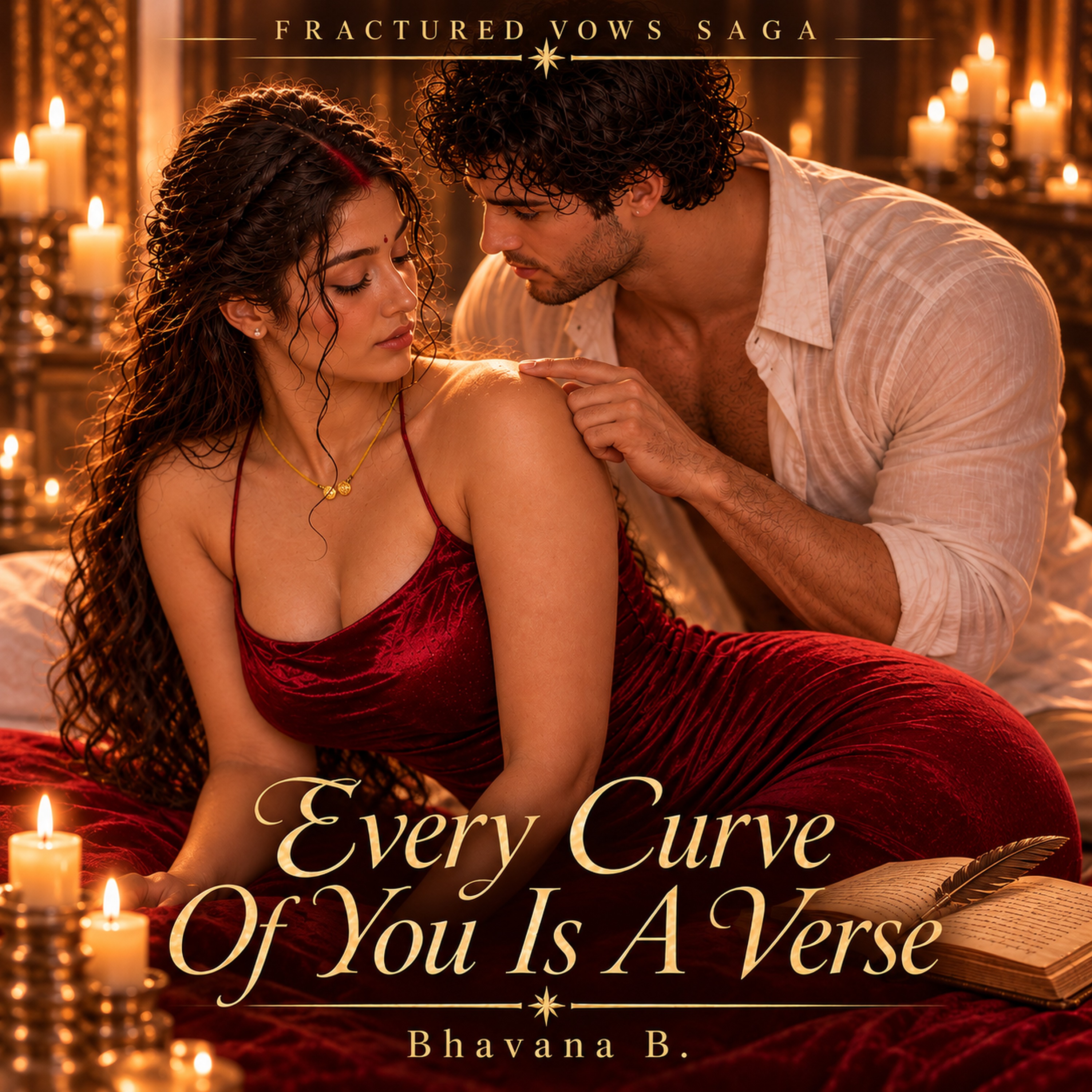
Every Curve of You Is a Verse cover
ENGLISH · CANTO ONE · JIMMY

Every Curve of You Is a Verse

The English one does not borrow a single simile. It borrows the situation instead: a man who knows what happened to the last poet who tried this, and does it anyway. No translation needed, so here is only what sits under it.

They say a poet once described a goddess
Every inch of her in words of gold
But when he reached the night she kept for heaven
She cursed his pen and the story stopped cold

The legend, told as a legend

That verse is the curse story, and the song is careful with it. They say. Which is right, because it is a story, and there is no way to know. The song then names the page it happens on: Page six your eyes, page seven your mouth, page eight, this is where he stopped, I'm turning the page.

Three languages, one refusal

The Telugu says I will not stop at the eighth canto. The Hindi says stopping at the eighth canto is not my rule. The English says some poets stop where the story turns too holy, I'll write you to the very last line.

Three songs, no shared images, and all three end by refusing the same thing.

Canto Two A world gone dark

In the poem this is the lowest point. Taraka is unbeatable and the gods are being dismantled. The sun does not shine properly, the wind is afraid to blow. They go to Brahma, who tells them the only thing that can end it does not exist yet, and cannot exist until Shiva opens his eyes.

Both songs in this pair take the cosmology and make it one person's promise.

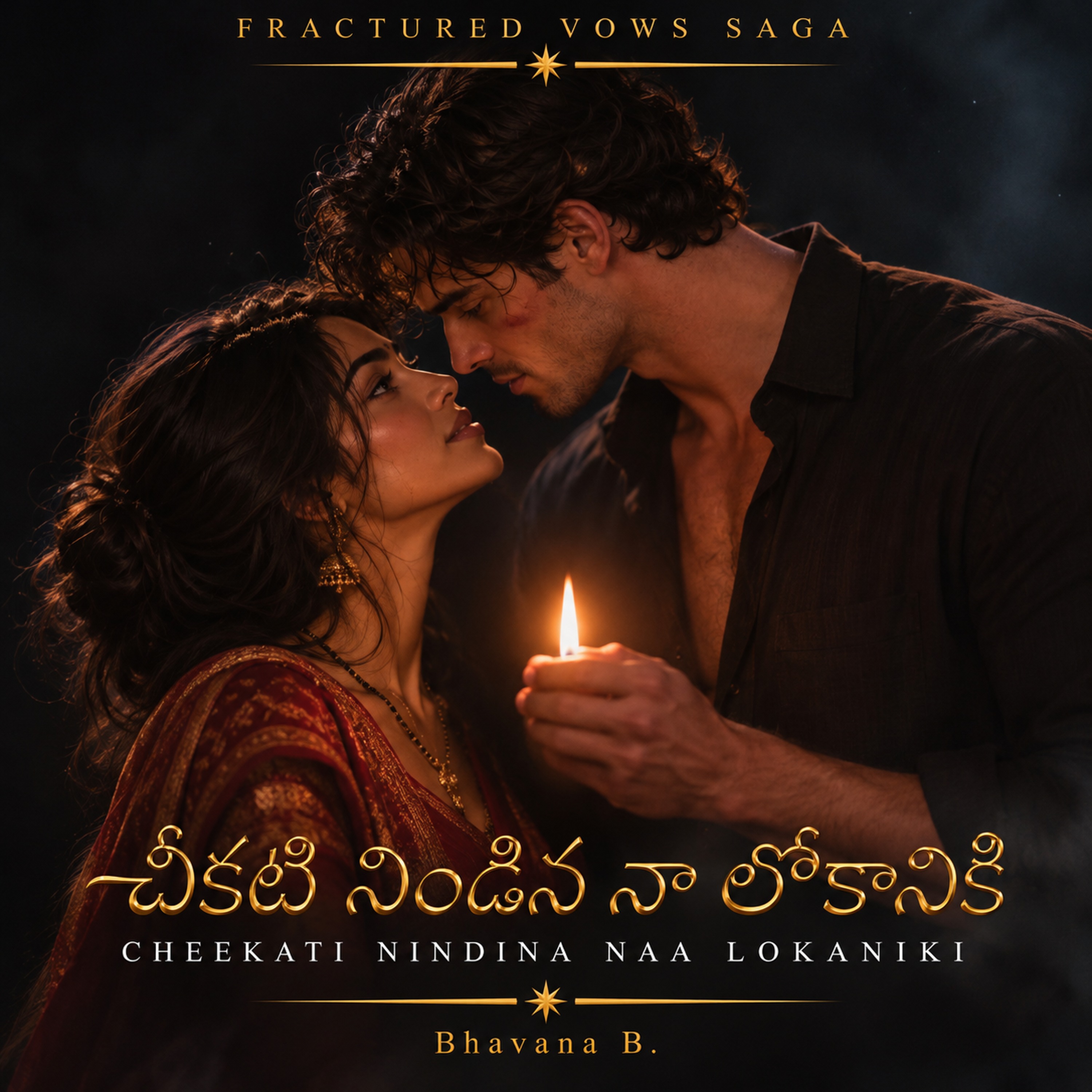
Cheekati Nindina Naa Lokaniki cover
TELUGU · CANTO TWO

చీకటి నిండిన నా లోకానికి
Cheekati Nindina Naa Lokaniki

The canto's darkness, shrunk from a universe to a room.

Ee lokamantha cheekataipoyindiThis whole world has gone dark
Nenunnanu kada kallu teruvuI am here, am I not. Open your eyes
Nuvvu rakapothe nenu melkonanuIf you do not come, I will not wake
Sooreedu kooda bhayapadi sagame veligaduEven the sun was afraid and burned only half
Poolu virisentha velugichchi mabbullo dagaduIt gave just enough light for flowers to open, then hid in the clouds
Gaali kooda bhayamtho mellaga veechindiEven the wind blew slowly, out of fear
Nuvvu leni naa lokam oopire marichindiMy world without you forgot how to breathe
Cheekati nindina naa lokanikiTo my world filled with darkness
Nene velugai vasthanuI will come as the light myself
Nuvvokkadanive naa oopiriYou alone are my breath
Nee kosame nenuntanuI exist only for you
Nee gaayalapai naa pedavulu manduga maaraniLet my lips turn to medicine on your wounds
Nee cheekati raatrilo naa kaugili deepamai velaganiLet my embrace burn as a lamp in your dark night
Entha pedda yuddhamaina naa odi daggara aagiponiHowever great the war, let it stop at my lap
Nee alasatantha naa gundelo karigiponiLet all your tiredness melt away inside my chest
Manchu kappina kondala innallu nidrapoyanuAll this time I slept like snow covered hills
Nee chethi vedi thagalagane nippula melkonnanuThe moment your hand's heat touched me I woke as fire
Okka nippuravva chaalu ee cheekati motthanni kaalchadanikiOne spark is enough to burn this whole darkness
Aa ravva naa pedavula meede undiand that spark is on my lips
Nuvvu lekunte nenu odipoyina rajyamWithout you I am a kingdom already lost
Nuvvu unte nenu nee gelupuku sakshyamWith you I am the witness to your winning
Ae devudoo ivvaleni varam nuvvu naakuYou are a boon no god could have given me
Ae shaapamoo thaakaleni thodu nenu neekuI am a companion no curse can touch
Tellavaarindi nee kallaloDay has broken, in your eyes
Mana velugu ika aaripoduOur light will not go out now
From the canto Canto 2

The gods in Canto Two are a defeated kingdom, and they say so to Brahma: the demon has taken their places, their rites, their light. The song's without you I am a kingdom already lost and its frightened sun and slow wind come straight out of that mood. What the poem resolves with a god's promise, the song resolves with a woman's.

Changed

In the poem, the help comes from above, and it comes as a plan. Here there is no Brahma and no plan. She says nene velugai vasthanu, I will come as the light myself, and that is the whole answer.

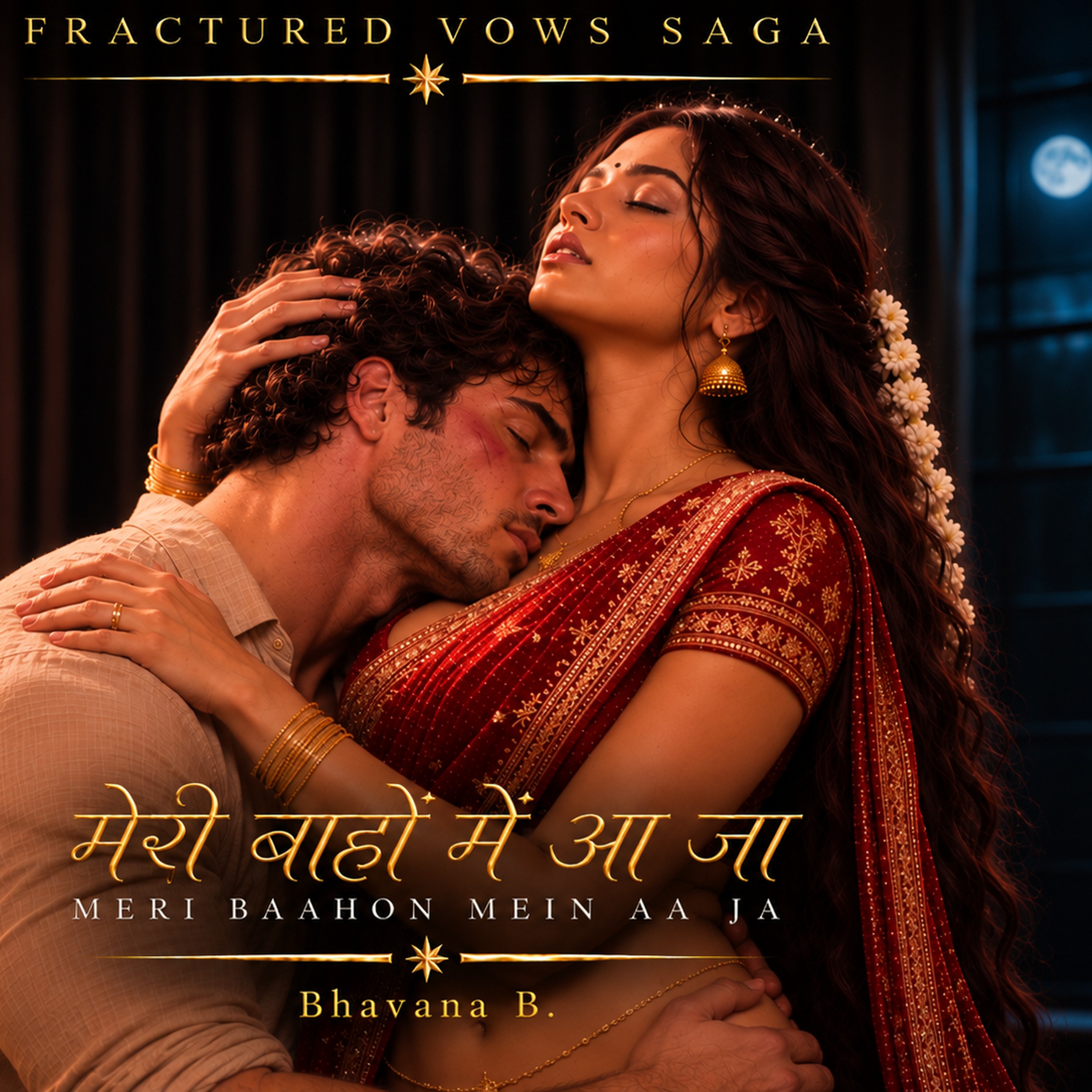
Meri Baahon Mein Aa Ja cover
HINDI · CANTO TWO · SOFIE

Meri Baahon Mein Aa Ja

Same canto, nothing shared with the Telugu. Where that one offers light, this one offers a night's shelter.

Aa ja thak gaya hai naCome. You are tired, aren't you
Aaj ki raat tu bas mera haiTonight you are only mine
Teri aankhon mein dekhi maine thaki hui si raatIn your eyes I saw a night worn out
Jaise bujhte diye ne hawa se ki ho aakhiri baatlike a dying lamp saying its last word to the wind
Apna har darr aaj meri hatheli pe chhod deLeave every fear of yours on my palm today
Aur khud ko ek baar meri saanson ki oor mod deand turn yourself, once, toward my breathing
Meri baahon mein aa jaCome into my arms
Har raat ko subah bana doonLet me turn every night into morning
Tere saare zakhmon peOn every one of your wounds
Main apna naam likha doonlet me write my name
Tere liye saare mausam ek saath khil jaayengeFor you all the seasons will bloom at once
Saawan ki boondein basant ke phool ek hi raat mein aayengemonsoon drops and spring flowers will come in one night
Mere gaalon ki laali mein tu subah ka rang dhoondh leFind the colour of morning in the flush of my cheeks
Meri zulfon ki chhaaon mein apni khoyi neend chun leGather your lost sleep in the shade of my hair
Teri ungliyaan jab meri kamar pe raah banaayeinWhen your fingers make a road at my waist
Meri saansein khud hi tere naam ka geet gaayeinmy breathing sings a song of your name on its own
Taaron se keh diya hai aaj dheere chaleinI have told the stars to move slowly tonight
Hawaon se keh diya hai aaj khidki pe na rukeinI have told the winds not to stop at the window
Chaandni se keh diya hai aaj parda na hataayeI have told the moonlight not to lift the curtain
Tere maathe ki har silwat main choom ke mita doongiEvery crease on your forehead I will kiss away
Teri har bechain karwat ko main sapna bana doongiEvery restless turn of yours I will turn into a dream
Saari duniya se jo na haara wo meri baahon mein haaraThe one the whole world could not defeat was defeated in my arms
Aur isi haar mein usne paaya apna sabse pyaara sahaaraand in that defeat he found the dearest shelter he had
So ja main jaag rahi hoonSleep. I am awake
Teri har subah ab mere naamEvery morning of yours is in my name now
Changed, and worth noticing looks back to Canto 5

The line the one the whole world could not defeat was defeated in my arms does not belong to Canto Two at all. It is Canto Five arriving early, the canto where Shiva puts down the disguise and calls himself bought. The song is in the dark part of the story and already knows how it ends.

Mine

Telling the stars to slow down, the wind to keep away from the window, the moonlight not to lift the curtain. Three instructions to the sky so that one exhausted man can sleep. None of it is in the poem.

Canto Three Spring out of season

Kama is sent to break Shiva's meditation, and spring comes with him where no spring should be. The ashoka flowers. The mango puts out shoots. Every creature in the grove turns to its mate at once. The poet spends a long time on the animals before anything happens to the gods, and then Shiva opens his third eye and there is nothing left of Kama but ash.

The song takes the half before the burning.

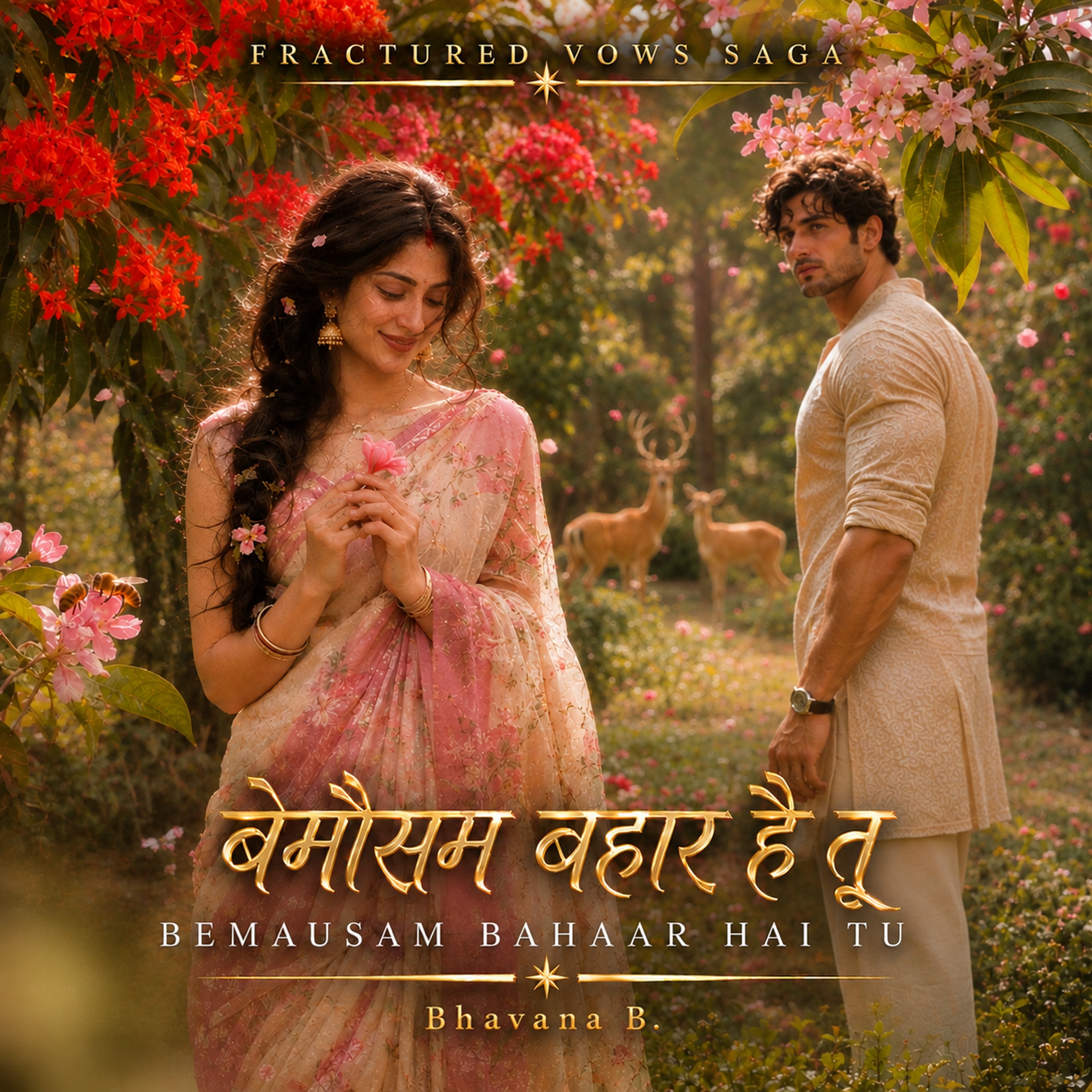
Bemausam Bahaar Hai Tu cover
HINDI · CANTO THREE · DUET

Bemausam Bahaar Hai Tu

A spring that arrives in the wrong month because one person looked at another.

Na saawan tha na faagun tha phir bhi kaliyaan khil gayinIt was not the rains, it was not Phagun, and still the buds opened
Teri ek nazar padi aur sooni daaliyaan hil gayinOne glance of yours fell and the bare branches moved
Aam ki daali bauraayi koyal bin bulaaye gaayiThe mango branch flowered, the koel sang uncalled
Main samajh na paayi kuch bhi bas teri khushboo aayiI understood nothing at all, only your scent came
Bin chhuye hi ashok ka ped laal phoolon se bhar gayaUntouched, the ashoka tree filled with red flowers
Jaise mera man bhi chupke se tere naam pe mar gayaas my heart too died quietly on your name
Dekh na ek hi phool pe do bhanwre saath baithe hainLook, two bees sit together on a single flower
Ek hi pyaale se dheere dheere dono ras peete hainand slowly, slowly, both drink from one cup
Rom rom mein kaliyaan jaagin tune dekha jo paas seBuds woke in every pore when you looked from close
Maine nazrein pher leen par haar gayi apni saans seI turned my eyes away but lost to my own breath
Bemausam bahaar hai tuYou are a spring out of season
Bin baadal fuhaar hai tuYou are a shower with no cloud
Mera pehla pyaar hai tuYou are my first love
Main to patthar ka parvat tha na dhadkan na shor thaI was a mountain of stone, no heartbeat, no sound
Tu aayi to jaana mere andar bhi ek bhor thaYou came, and I learned there was a dawn inside me too
Hiran ne seeng se hirni ko chhua bade pyaar seThe deer touched the doe with his horn, with great love
Main bhi bas tujhe chhoona chaahoon aise hi iqraar seI too want only to touch you, with that same admission
Haathi ne kamal ka paani apni saathi ko pilaayaThe elephant gave his mate lotus water to drink
Us pal mere patthar dil ko bhi kuch hosh aayaIn that moment some sense came even to my stone heart
Chakwe ne aadha kamal toda chakwi ko pyaar se diyaThe chakwa broke half a lotus and gave it lovingly to the chakwi
Maine bhi apni aadhi saans tere naam kar diyaand I put half my breath in your name
Tu bel hai phoolon se ladi thodi si jhuki si chalti haiYou are a vine heavy with flowers, you walk a little bent
Teri ungli chhoo gayi to rongte aise khade hueYour finger brushed me and the hair rose on my skin
Jaise kadamb ki daali pe saare phool ek saath jade huelike every flower on a kadamba branch opening at once
Tu chhede to lagta hai faagun mere gaalon peWhen you tease me it feels like Phagun on my cheeks
Tu sharmaaye to lagta hai chaand utra baalon peWhen you blush it feels like the moon has come down on my hair
Patjhad bhi aaye to aaye main phir bhi khili rahoongiLet the autumn come if it comes, I will still be in flower
Teri ek nazar ki dhoop mein main har mausam sahoongiIn the sunlight of one glance of yours I will bear every season
Ek phool do saansein aur ye bemausam raatOne flower, two breaths, and this out of season night
Na tu kuch bole na main phir bhi ho gayi baatYou said nothing, nor did I, and still it was said
Mahakavi Kalidasa wrote Canto 3

madhudvirephah kusumaikapatre papau priyam svam anuvartamanah

The bee drank from a single flower cup, following his beloved.

One flower, two drinkers, one following the other. The song keeps all three parts: ek hi phool pe do bhanwre, ek hi pyaale se dono ras peete hain.

Mahakavi Kalidasa wrote Canto 3

shringena ca sparshanimilitakshim mrigim akandayata krishnasarah

And the black antelope scratched the doe with his horn, and she closed her eyes at the touch.

The closed eyes are the detail that makes it. The song does not translate them, but it keeps the gesture: the deer touched the doe with his horn, with great love.

Not confirmed, and said so

The elephant giving his mate lotus water, and the chakravaka breaking half a lotus for his partner, belong to the same stretch of the canto, where the poet writes that the paired creatures showed their love by what they did. The bee and the antelope above are quoted from the text. Those other two verses could not be confirmed from a source for this page, so they are left as what they are: images from the same family, not quotations.

What the song leaves out

Everything after. In the poem, Shiva's eye opens on this exact scene and Kama is ash before the gods can finish asking him to stop.

tavat sa vahnir bhavanetrajanma bhasmavashesham madanam cakara

By then the fire born of Bhava's eye had made of Madana nothing but ash.

The song stops one verse before that. It is a love song that ends where the poem turns.

Canto Four What is left when the body is gone

Rati sits with the ash of her husband and intends to burn with him. A voice out of the sky stops her and tells her he will be given back after Shiva's marriage. He is given back, but not his body. From then on the god of desire is called Ananga, the bodiless one. He is everywhere and he cannot be seen or held.

Two songs sit on that, and between them they are the whole of Volume Two.

Main Kahin Gaya Hi Nahin cover
HINDI · CANTO FOUR · JIMMY

मैं कहीं गया ही नहीं
Main Kahin Gaya Hi Nahin

Sung by someone with no body left, to someone who thinks he has gone.

Main kahin gaya hi nahin hoonI have not gone anywhere at all
Sun le main kahin gaya nahin hawa mein ghula hua hoonListen, I did not go, I am dissolved in the air
Tere baalon ki khushboo banke tujhse lipta hua hoonI have become the scent of your hair and am wrapped around you
Tere kangan ki har khanak mein meri aahat chhupi haiMy footstep is hidden in every ring of your bangles
Teri aankhon ke kaajal mein meri har raat likhi haiEvery night of mine is written in the kohl of your eyes
Jis takiye pe sar rakhti hai wahaan meri saans thahri haiOn the pillow where you lay your head, my breath has stopped and stayed
Jis chaadar mein tu simti hai wahaan meri raat bikhri haiIn the sheet you gather around you, my night lies scattered
Tere honthon pe jo nami hai wo meri hi nishaani haiThe damp on your lips is a mark I left
Tu jise aansoo kehti hai wo apni hi kahaani haiWhat you call tears is our own story
Ye doori mujhko chhoo gayi magar pyaar ko chhoo na sakiThis distance touched me but could not touch the love
Main meelon door khada raha par tujhse juda na ho sakaI stood miles away and still could not be parted from you
Teri saanson mein samaya hoonI am contained inside your breathing
Jab aam pe baur aa raha hai koyal pukaar laga rahi haiWhen the mango flowers and the koel starts calling
Samajh lena wo meri aawaaz tujhko bula rahi haiunderstand that it is my voice calling you
Jab chaand teri khidki par thahar ke tujhko dekh raha haiWhen the moon stops at your window and looks at you
Samajh lena meri nazar ka saaya tujh pe pad raha haiunderstand it is the shadow of my eyes falling on you
Jab hawa teri lat chhed ke gaal gulaabi kar rahi haiWhen the wind teases a curl loose and turns your cheek pink
Samajh lena meri ungliyaan tujhko chhoo rahi hainunderstand those are my fingers touching you
Jab neend mein tu muskura ke bina wajah sharma rahi haiWhen you smile in your sleep and blush for no reason
Samajh lena meri hi baahon mein tu raat bita rahi haiunderstand you are spending the night in my arms
Tu kehti thi main tere dil mein rehta hoon har palYou used to say I live in your heart every moment
To sun jo dil mein rehta hai wo hota nahin ojhalThen listen, what lives in the heart does not go out of sight
Tu aankhein band karke bas mera naam pukaar lenaJust close your eyes and call my name
Main hawa banke aaunga tu baahein khol denaI will come as the wind. Open your arms
Ruk ja abhi mat ja ye kahaani khatm nahin huiWait. Do not go yet. This story is not finished
Jis din ye doori thak jayegi hum phir milenge yahinThe day this distance gets tired, we will meet again, right here
Jo baat adhoori chhooti thi wo baat poori karungaWhat was left half said, I will finish
Jo raat adhoori chhooti thi use phir se bharungaThe night that was left half lived, I will fill again
From the canto Canto 4

In Canto Four, Rati is about to burn herself on her husband's pyre when a voice from the sky stops her and promises that Shiva will restore him once he is married. He comes back, but without a body. That is why the god of desire is called Ananga, the one with no limbs. He is present everywhere and can be touched nowhere.

This song is sung in that voice. Not I will return, but I never left, I am the scent in your hair, I am the sound in your bangles, I am the wind on your cheek. That is not a metaphor the songwriter reached for. It is the literal condition of the god whose canto this is.

Changed

In the poem the one who is burned away is desire, and the one left grieving is his wife. Here it is reversed and made human. The man is the one who is gone, and what is missing is not his body but his memory of her.

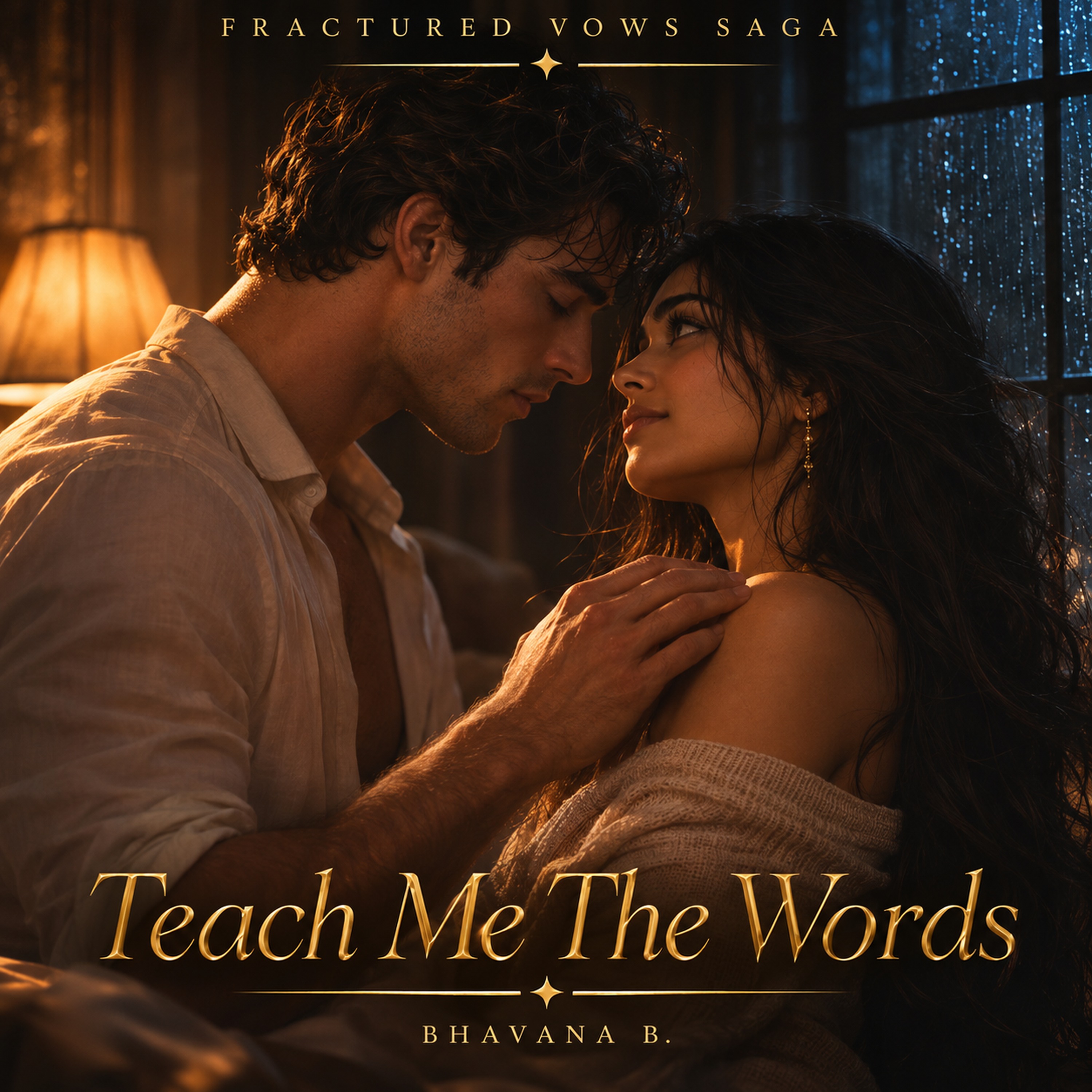
Teach Me The Words cover
ENGLISH · CANTO FOUR · JIMMY

Teach Me The Words

The other side of the same canto, in English, and the one place on this page where the poem and the saga say exactly the same thing.

My hands knew where to go before my head could catch them up
They slowed down at your shoulder like they'd learned it touch by touch
There's an inch before I reach you where my whole chest goes still
Like my body kept the record and my memory never will

What it shares with Canto Four

Ananga has no body and keeps all his power. This song is a man who has his body and has lost everything else, and the body is the only part of him that still knows her. Same split, turned over. Teach me the words, I still know the tune.

There is a whole shade on this soundtrack built on that one moment, the fire that opens before it can finish asking. It is called Ash, and the reason it earns the name is the same reason this canto does. Nothing in it is about punishment. It is about how fast something can be destroyed by the exact thing it was reaching toward, and how what survives afterward is never the body, only the want. The songs there are not retellings of Canto Three. They just keep finding their way back to the same fire.

Hear the shade called Ash →

Canto Five Bought by her penance

This is the canto that made me go back and read the whole poem, and the songs for it are still being written, so there is nothing to play here yet. It belongs on the page anyway, because the whole thing turns here.

Parvati gives up everything that made her beautiful and goes into the snow to perform penance. Shiva comes to her disguised as a young ascetic and does the cruellest thing he could have done: he runs himself down to her face, lists everything wrong with Shiva, and waits to see what she will say. She defends him to a stranger. Then the stranger puts the disguise away, and the last line of the canto is his.

Mahakavi Kalidasa wrote Canto 5, final verse

अद्य प्रभृत्यवनताघ्गि तवास्मि दासः क्रीतस्तपोभिः

adya prabhrity avanatangi tavasmi dasah kritas tapobhih

From this day on, you with your body bowed low, I am your slave, bought by your penance.

The god who burned the god of love to ash two cantos earlier says that. He does not say I love you. He says I have been bought, and names the price, and the price was everything she had.

Cantos Six and Seven The waiting

Shiva sends the seven sages to ask her father for her. Himalaya agrees, and a date is fixed. Then there is nothing to do but wait for it, and the whole of Canto Seven goes on preparations, the procession, the ceremony.

One song lives in the gap between the yes and the day. It was nearly filed under Canto Three, until somebody read it properly.

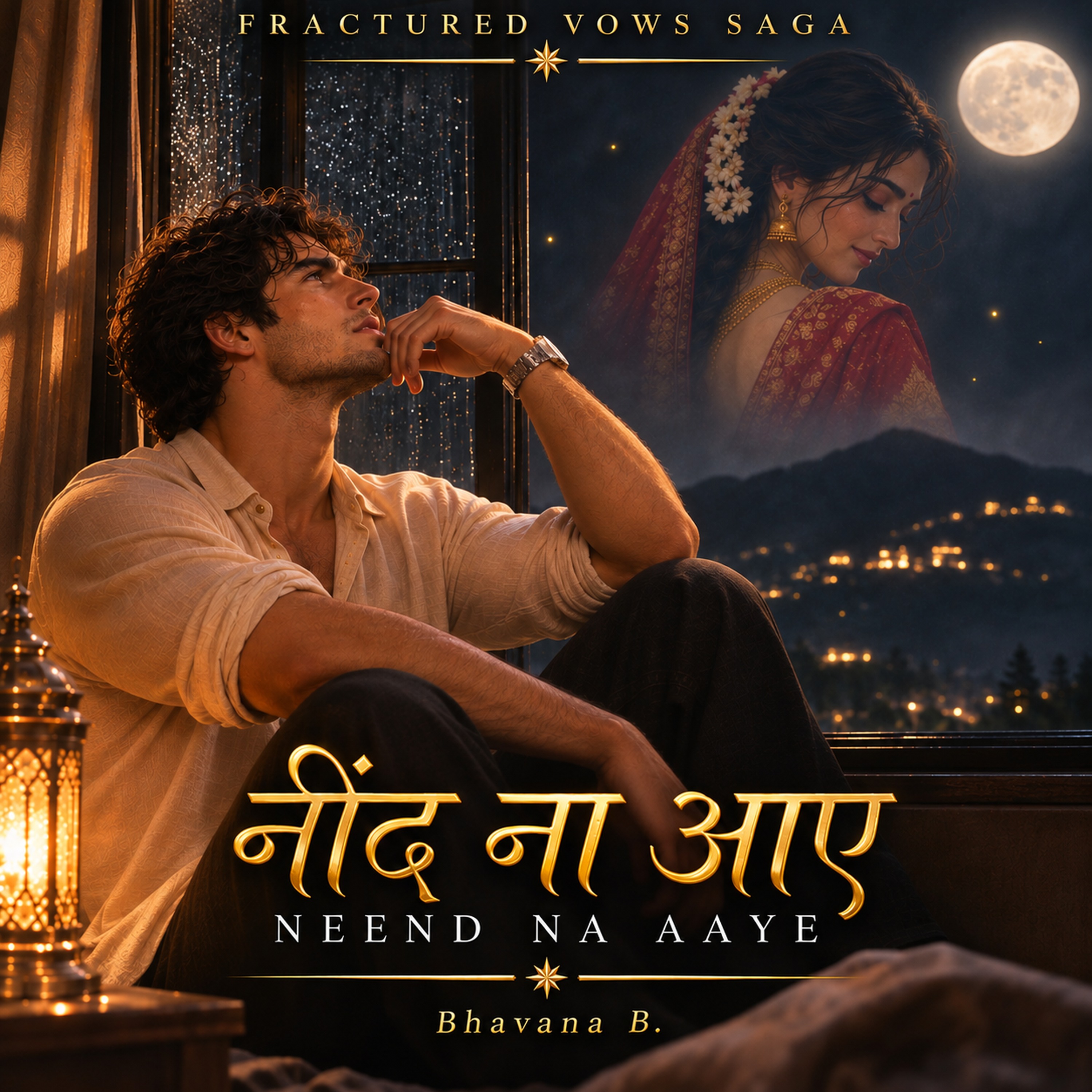
Neend Na Aaye cover
HINDI · CANTOS SIX AND SEVEN · JIMMY

Neend Na Aaye

An ascetic who has agreed to get married and cannot sleep until the day comes.

Jo barson dhyaan mein baitha ab karwatein badalta haiThe one who sat years in meditation now turns from side to side
Jo patthar sa thahra tha ab mom sa pighalta haiThe one who was still as stone now melts like wax
Tera naam kisi ne liya aur meri neend ud gayiSomeone said your name and my sleep flew away
Jo raah kabhi na mudti thi woh teri oor mud gayiThe road that never turned has turned toward you
Ye chaand bhi sharaarti hai teri khidki pe jaata haiThis moon is mischievous too, it goes to your window
Aur laut ke mujhko teri har ek baat bataata haiand comes back and tells me everything about you
Woh kehta hai tu soyi nahin takiye se baatein karti haiHe says you are not asleep, you are talking to your pillow
Mera naam le le ke har karwat pe aahein bharti haitaking my name and sighing with every turn
Neend na aaye chain na aayeNo sleep comes, no peace comes
Jaldi se woh din aayeLet that day come quickly
Maine jugnu se kaha ja uske kamre mein chamakI told the firefly, go and shine in her room
Jab woh soye to uske sapnon mein bhar de meri jhalakand when she sleeps, fill her dreams with a glimpse of me
Jo bootiyaan raat ko parvat pe deeyon si jalti hainThe herbs that burn like lamps on the mountain at night
Aaj woh bhi meri tarah tere intezaar mein jalti haintonight they burn like me, waiting for you
Pandit se poochha muhurat woh hans ke bola sabr karoI asked the priest for the auspicious date and he laughed and said be patient
Maine kaha pandit ji bas thoda jaldi zikr karoI said priest, just name it a little sooner
Jisne duniya chhod di thi woh ab baazaar ghoomta haiThe man who had renounced the world now walks the market
Tere liye har rang ka ik ik kangan choomta haikissing one bangle of every colour, for you
Mere jogi man ko bhi ab sehre ki chaahat haiEven my ascetic heart now wants the bridegroom's veil
Main sochoon tu kaisi lagegi laal jode mein saji huiI wonder how you will look dressed in the red wedding clothes
Maathe pe bindi haathon mein mehndi aankhein thodi jhuki huibindi on your forehead, mehndi on your hands, eyes a little lowered
Jab tera haath mere haath mein pehli baar aayegaWhen your hand comes into mine for the first time
Ye jogi us din sach mein apna sab kuch paayegathis ascetic will truly have everything, that day
Teri haldi waali hatheli mere gaalon ko chhoo legiYour turmeric covered palm will touch my cheek
Woh peeli si ik chhuan meri har thakan bhula degiand that one yellow touch will make me forget every tiredness
Jab tera ghoonghat uthaunga to saans meri ruk jayegiWhen I lift your veil my breath will stop
Teri palkein jab jhukengi ye raat bhi jhuk jayegiWhen your lashes lower, this night will lower too
Jo kabhi na soya tha teri baahon mein so jaungaThe one who never slept will sleep in your arms
Teri choodi ki khankhan se meri subah jaagegiMy morning will wake to the clink of your bangles
From the cantos Six and Seven

Canto Six is the proposal and the fixing of the date. Canto Seven is everything that comes after the date is fixed: the preparations, the procession, the ceremony. The song is the night in between, which the poet does not write at all.

Mahakavi Kalidasa wrote Canto 1, verse 10

bhavanti yatraushadhayo rajanyam atailapurah suratapradipah

Where at night the herbs become lamps that need no oil, for lovers.

The word is surata-pradipa. Lamps for lovemaking. The poet's mountain lights its own caves for the couples inside them, and the song borrows the light for a man who cannot sleep: tonight they burn like me, waiting for you.

Mine

The whole comedy of it. An ascetic haggling with a priest over the date, a man who renounced the world now going up and down a market kissing bangles, and a moon running messages between two houses. The poet's Shiva is never once funny. This one is.

Canto Eight The chapter that was skipped

This is the one. The canto called Suratavarnanah, the description of lovemaking. The canto that gets left out of school editions. The canto moralists have objected to for centuries on the grounds that a poet should not describe the union of the parents of the universe. The canto the poet is said to have been cursed for.

It is also, in the text scholars accept as his, the last thing he wrote of this poem. The poem called The Birth of Kumara ends here, before Kumara is born.

So there is a girl in a classroom whose teacher turns the page without a word, and there is a woman, a long time later, who writes that canto as a song in Hindi and puts its final verse into it in Sanskrit, unchanged.

Sau Mausam Beete cover
HINDI · CANTO EIGHT

Sau Mausam Beete

A hundred seasons passing as one night, told through a sunset, four seasons, and a lamp nobody puts out.

Dekho sooraj doob raha hai jaise tu sharma ke jhukiLook, the sun is going down, the way you lowered your head in shyness
Pashchim ka aasmaan laal hua jaise teri maang sajiThe western sky turned red, like the parting of your hair filled in
Panchhi laut rahe ghonslon mein pedon pe chhaayi khaamoshiBirds are returning to their nests, silence has settled on the trees
Dheere-dheere andhera phaila jaise teri zulfon ki madhoshiSlowly the dark spread, like the drowsiness of your hair
Ab dekho poorab se chaand utha jaise ghoonghat se tera chehraNow look, the moon has risen in the east, like your face from under the veil
Uski chaandni tere kandhe pe jaise mere hothon ka pehraIts moonlight on your shoulder, like my lips standing guard
Shaam ki hawa mein teri khushboo jaise raat ki raani khiliYour scent in the evening air, like the night jasmine opening
Tere hothon ki narmi pe aaj meri saans ja ke miliOn the softness of your lips my breath went and met its own
Diya bujha doon? Nahin rehne deShall I put out the lamp? No. Leave it
Aaj ye chaand bhi dekhe hum kaise khoyeTonight let even the moon see how lost we are
Sau mausam beete jaise ek raatA hundred seasons passed like one night
Teri baahon mein meri har baatIn your arms, everything I had to say
Na subah aayi na shaam gayiNo morning came, no evening left
Basant aaya tere baalon mein maine phool gine nahinSpring came into your hair and I did not count the flowers
Saawan barsa teri peeth pe boondein maine chunin wahinThe rains fell on your back and I gathered the drops right there
Sardi aayi to teri saansein meri gardan pe garam rahinWinter came and your breath stayed warm on my neck
Garmi aayi to teri kamar pe meri ungliyaan naram rahinSummer came and my fingers stayed soft at your waist
Kitne saal guzre baahar humko khabar tak na huiHow many years went by outside, we never even heard
Tere hothon ki ek muskaan mein saari umar poori huiIn one smile of your lips a whole lifetime was completed
Patjhad aaya patte gire maine tera aanchal thaamaAutumn came, the leaves fell, I held the end of your garment
Teri baahon ki chhaaon mein maine dekha na koi zamaanaIn the shade of your arms I saw no age of the world at all
Samadivasanisheetham sanginastatra shambhohFor Shambhu, in her embrace, with day and midnight alike
Shatamagamadritoonaam saagramekaa nishevaa full hundred seasons passed as a single night
Din aur raat ek jaise ho gayeDay and night became the same
Sau se zyaada mausam beete jaise bas ek raatMore than a hundred seasons passed, like only one night
Na ghadi na din na saal bas teri dhadkan ka hisaabNo hour, no day, no year, only the count of your heartbeat
Tu paas rahi to waqt ne bhi band kar di apni kitaabWith you near, even time closed its book
Sooraj khada darwaaze pe kehta hai kholo ye kiwaadThe sun stands at the door saying open this door
Main kahoon abhi to shaam dhali hai ja phir aana agli baarI say the evening has only just fallen, go, come again next time
Chaand thak ke so gaya taare bhi ab oongh raheThe moon got tired and slept, the stars are dozing now
Hum dono ab bhi jaage hain ek-dooje mein doob raheWe two are still awake, drowning in each other
Tere maathe ka paseena jaise os padi ho phoolon peThe sweat on your forehead, like dew fallen on flowers
Teri paayal so gayi kab ki teri bindiya bhi khisak gayiYour anklets fell asleep long ago, your bindi has slipped too
Aur tu hans ke kehti hai dekho raat phir se sarak gayiAnd you laugh and say look, the night has slipped away again
Aur abhi to shaam hi hui haiAnd it is still only evening
Chal phir se shuru kareinCome. Let us start again
Mahakavi Kalidasa wrote Canto 8, verse 91, the last verse of the poem

समदिवसनिशीथं सझ्गिनस्तत्र शंभोः
शतमगमदृतूनां साग्रमेका निशेव ।
न तु सुरतसुखेभ्यश्छिन्नतृष्णो बभूव
ज्वलन इव समुद्रान्तर्गतस्तज्जलौघैः ।। ࡗࡕ ।।

samadivasanisitham sanginas tatra shambhoh
shatam agamad ritunam sagram eka niseva
na tu suratasukhebhyash chinnatrishno babhuva
jvalana iva samudrantargatas tajjalaughaih

There, for Shambhu in her embrace, with day and midnight alike, a full hundred seasons passed as a single night. And still his thirst for the joys of love was not cut off, as a fire gone down into the ocean is not put out by its floods.

What the song does with it

Look at the two halves of that verse and then at the song.

The first half is sung in the song in Sanskrit, word for word, and the Hindi refrain is its translation: sau mausam beete jaise ek raat. A hundred seasons passed like one night. The title of the song is the verse.

The second half is never quoted. Instead the song ends with it, in Hindi, as a line of dialogue: and it is still only evening. Come, let us start again. Which is the fire in the ocean, said by a person instead of a poet.

And then there is the lamp. Twice in the song somebody asks shall I put out the lamp, and twice the answer is no, leave it. A canto that generations of editors have taken out of the book, and the song's one instruction is: leave the light on.

Mine

The four seasons passing across one body, spring in her hair, the rains on her back, winter in her breath, summer under his fingers. The sun knocking at the door and being told to come back later. The moon getting tired and going to sleep before they do.

✦

Valmiki One shloka, three descriptions

Not everything here comes from the poet. Two songs describe Jimmy using words that belong to Rama, and they come from a single verse near the opening of the Ramayana, where Narada is answering the question of who in the world is the perfect man.

Valmiki wrote Ramayana, Bala Kanda 1.10

महोरस्को महेष्वासो गूढजत्रुररिंदमः ।
आजानुबाहुः सुशिराः सुललाटः सुविक्रमः ।।

mahorasko maheshvaso gudhajatrur arimdamah
ajanubahuh sushirah sulalatah suvikramah

Broad chested, a great archer, his collarbones hidden, a subduer of enemies. His arms reach to his knees, his head well shaped, his forehead handsome, his valour excellent.

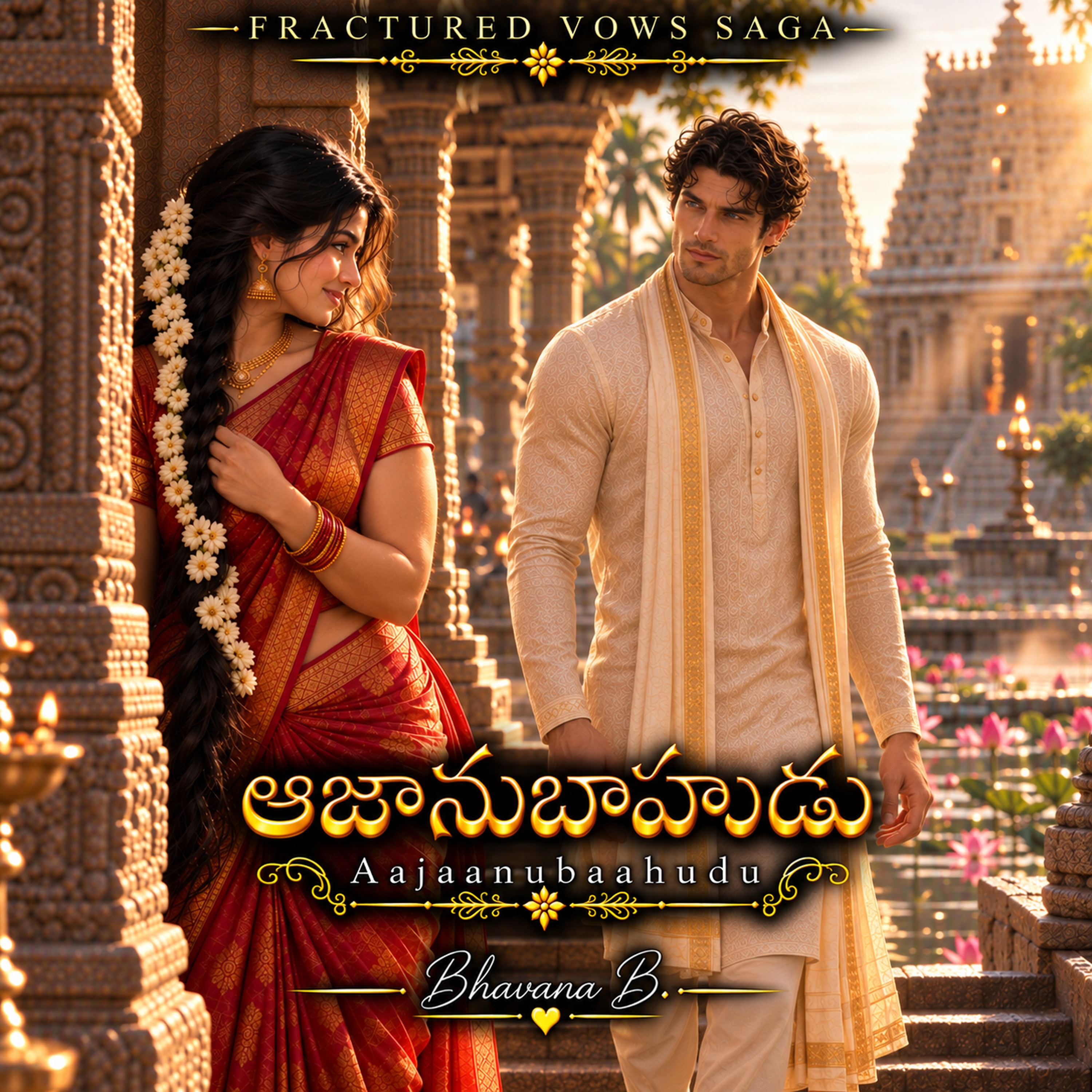
Aajaanubaahudu cover
TELUGU · SOFIE

ఆనానుబాహుడు
Aajaanubaahudu

A woman describing a man to a friend, and reaching for Rama's words to do it. Three of them come out of the verse above.

Aajaanubaahudu atanuHe is long armed, his arms reaching his knees
Aravinda nayanudu atanuHe is lotus eyed
Chooputone manasunu docheWith a look alone he stole the mind
Chirunavvula chorudu atanuHe is a thief who works in smiles
Evarani adagake cheliDo not ask who he is, my friend
Naa edalo raaju atanuHe is the king in my heart
Chandruni taladanne momuA face that strikes down the moon
Chekkita poochina sottala soyagamThe beauty of the dimples that flowered on his cheek
Navvite mutyaalu raaleWhen he laughs, pearls fall
Aa navvuke naa niddura dooramand that laugh puts my sleep far away
Taamara rekula kannulu ataniviHis eyes are lotus petals
Kontega okkasari kanugeetiteIf he glances just once, a little mischievously
Kaalam kooda kadalaka nilichetime itself stands still and does not move
Naa gunde gati tappi parugulu teeseand my heart loses its rhythm and breaks into a run
Visaala vakshamu, veera bhujamuluA broad chest, a warrior's shoulders
Silpi chekkina sila saundaryamthe beauty of stone carved by a sculptor
Taletti choostene ande momuA face you can only see by lifting your head
Aakaasame aa ettuku saakshyamthe sky itself is the witness to that height
Nadichoste raajasame nadichinattuWhen he walks it is as if royalty is walking
Veedhulannee talatippi choostaayiWhole streets turn their heads to look
Maguvalu maimarachi nilichipoteIf the women forget themselves and stand there staring
Magavaari gundelu asooyato mandutaayithe men's chests burn with envy
Evaremanna chevina pettaduWhatever anyone says, he does not take it in
Ea pogadtakoo pongipoduNo praise swells him
Tana viluvemito tanake erukaHe knows his own worth himself
Kireetameala aa raajukikaWhat need has that king of a crown
Garvamani antaaru lokuluPeople call it arrogance
Gelupe atani swabhavamani teliyakanot knowing that winning is simply his nature
Aa garvame naaku nachina sogasuThat very pride is the beauty I liked in him
Aa sogasuke daasi naa manasuand to that beauty my heart is a servant
Deepam chooste atani kannuleI look at a lamp and it is his eyes
Puvvunu chooste atani navvuleI look at a flower and it is his smile
Ea vaipu choosina ataneWhichever way I look, it is him
Atanu naa vaadaite chaaluIf he is mine, that is enough
Ee janmaku vere varamealaWhat other boon do I need for this life
From Valmiki's verse three of them

Aajaanubaahudu is ajanubahuh, arms to the knees. Visaala vakshamu is mahorasko, broad chested, one line above it in the same shloka. Aravinda nayanudu, lotus eyed, is not in that verse but is one of the standard epithets of Vishnu and of Rama. The extended version adds Raamuni polina raajasam atanidi, the royal bearing of one like Rama, and says the comparison out loud.

The thing that is easy to miss

In Kumarasambhavam, the poet describes Parvati from her feet up to her hair, and the commentary says why: a god is described from the foot upward, a human being from the head down.

Now look at the order here. Face. Cheek. Smile. Eyes. Chest. Shoulders. Walk. Head downward.

He looks at her and the old order makes her a goddess. She looks at him and keeps him a man. The two songs sit on either side of the same rule, and the rule is the answer to anyone who thinks this page is putting two characters in the place of the gods. The last verse settles it anyway: people call it arrogance, not knowing that winning is simply his nature. That is a quarterback.

This is also the shade called Golden on the soundtrack, the one everyone sees from the outside, the trophies and the crowd and the build Valmiki already had words for three thousand years ago. The rest of that shade is not built on this verse the way these two songs are, but it lives in the same place: admiring a man's body in public, out loud, without apologising for it.

Hear the shade called Golden →

✦

Meera Loving someone who does not turn around

Mirabai was born around 1498 into a Rajput royal family in what is now Rajasthan, married a crown prince of Mewar in 1516, and was widowed five years later. She wrote padas to Krishna, whom she calls Girdhar, the mountain bearer, and she sang them in public, which was not what a widowed Rajput princess was supposed to do.

Much of what everyone knows about her is legend and not record. The in-laws who persecuted her, the cup of poison sent as nectar, the basket with a snake in it: those are stories told about her, and historians cannot confirm them. What is not in doubt is the poetry, and what the poetry does. She sings to someone who does not answer where anyone can see. In some of her padas Krishna is a detached yogi who leaves his lovers in pain, and she calls herself a yogini.

That is a different ache from Parvati's, and it is the one Volume Two is made of.

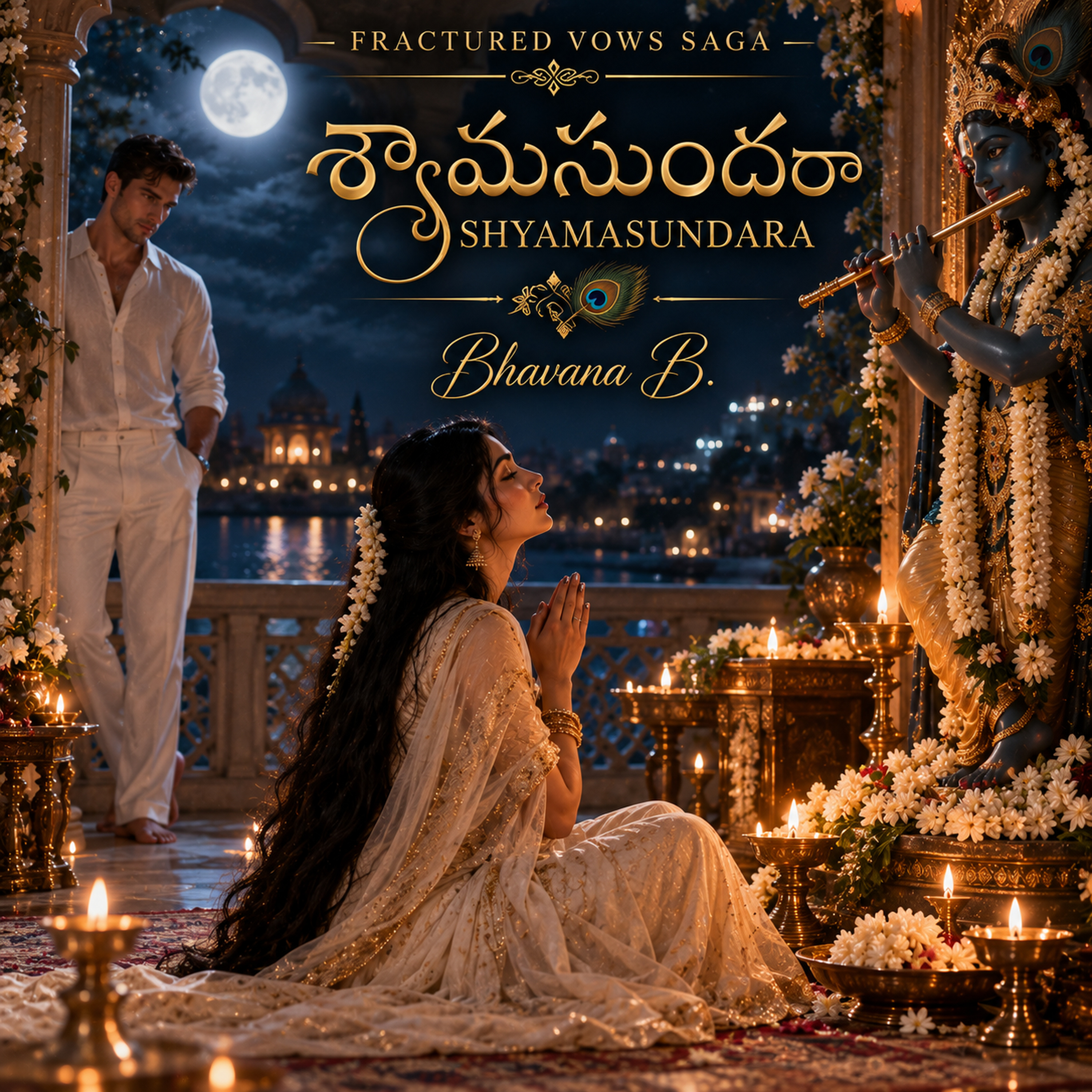
Shyaamasundara cover
TELUGU · DEVOTIONAL · SOFIE

స్యామసుందర
Shyaamasundara

She names herself in it. Not a Meera. This Meera.

Shyamasundaraa, naa shyamasundaraaDark beautiful one, my dark beautiful one
Ee daarilo unnaavuraaAre you somewhere on this road
Kanulu moosinaa neeve kanipinchiWhen I close my eyes it is you I see
Kanulu terichinaa edurevuraawhen I open them you are standing in front of me
Nee raakakai vechina naa hrudayamMy heart, waiting for you to come
Prati savvadini neevanukunnadiraahas taken every small sound for you
Ee meeranu cheravaaWill you not reach this Meera
Yamuna teeraana vennela reyiOn the bank of the Yamuna, a moonlit night
Nee jaada kosam nilichinadaadid it stand there looking for a trace of you
Kadile gaalilo muralii gaanamThe flute song in the moving air
Naa perune pilichinadaawas it calling my name
Mallela parimalam taakina velaWhen the scent of jasmine touched me
Nee saanidhyame anipinchenuraait felt like your presence itself
Gajjela savvadi vinipinchinaaWhen I heard the sound of anklets
Nee adugulenani murisenuraaI was glad, thinking they were your footsteps
Okkasari naa vaipu choochina chaaluOne look my way is enough
Ee janmantaa velugaipodaaand this whole life turns to light
Okka kshanam nee chenta nilichina chaaluOne moment standing beside you is enough
Kaalame akkada aagipodaaand time stops right there
Nee muralinai nee maaripotheIf I became your flute
Nee adharala chenta nilichedanaaI would stay at your lips
Nee medalonii vanamaalanaitheIf I became the garland at your neck
Nee gundepai nidurichedanaaI would sleep on your chest
Nee paadamulu nadiche daariloOn the road where your feet walk
Puvvunai nee parachukondunaalet me become a flower and spread myself there
Lokamantaa nannu marchinaaEven if the whole world forgets me
Nee jnaapakame naaku lokamuraathe memory of you is my world
Neevu doorana nilichina koddiiThe further away you stand
Naa prema marinta cheravuraathe closer my love reaches you
Enni reyulu gadichinaaHowever many nights pass
Enni ruthuvulu maarinaahowever many seasons change
Ee eduruchoopu alasipoduraathis waiting does not get tired
Neevu vastaavani kaaduNot because you will come
Neevu naavavutavani kaadunot because you will be mine
Ninnu preminchadameLoving you, only that
Naa hrudayanki varamuraais the boon given to my heart
Naa kannitilo neeveIn my tears, you
Naa navvulo neevein my laughter, you
Naa maunamantaa nee peraeall of my silence is your name
Ninnu cheradame prema kaadaniThat reaching you is not what love is
Ninnu preminchadame varamuraathat loving you is itself the boon
Ee meera hrudayalo eppatiki neeveeraaIn this Meera's heart it is you, always
The two things that touch him

If I became your flute I would stay at your lips. If I became the garland at your neck I would sleep on your chest.

The murali and the vanamala are the two objects that are always on Krishna's body. To ask to be one of them is the oldest move in this kind of devotion, and it is the most physical thing a bhakti poet is allowed to say.

Why this one and not Parvati

Parvati's story ends with him saying he is hers. Meera's never does. The whole weight of her poetry sits on wanting someone who is everywhere and not in front of her, and on being watched while she does it.

This song refuses the ending on purpose. Not because you will come, not because you will be mine. Loving you, only that, is the boon. It is the one song in all of this that does not want to be answered.

✦

What the grandmother said

One more, and it is the quietest. A song entirely about a veena, about a woman who was made to sing and then went silent. The last thing he says in it is not about her at all.

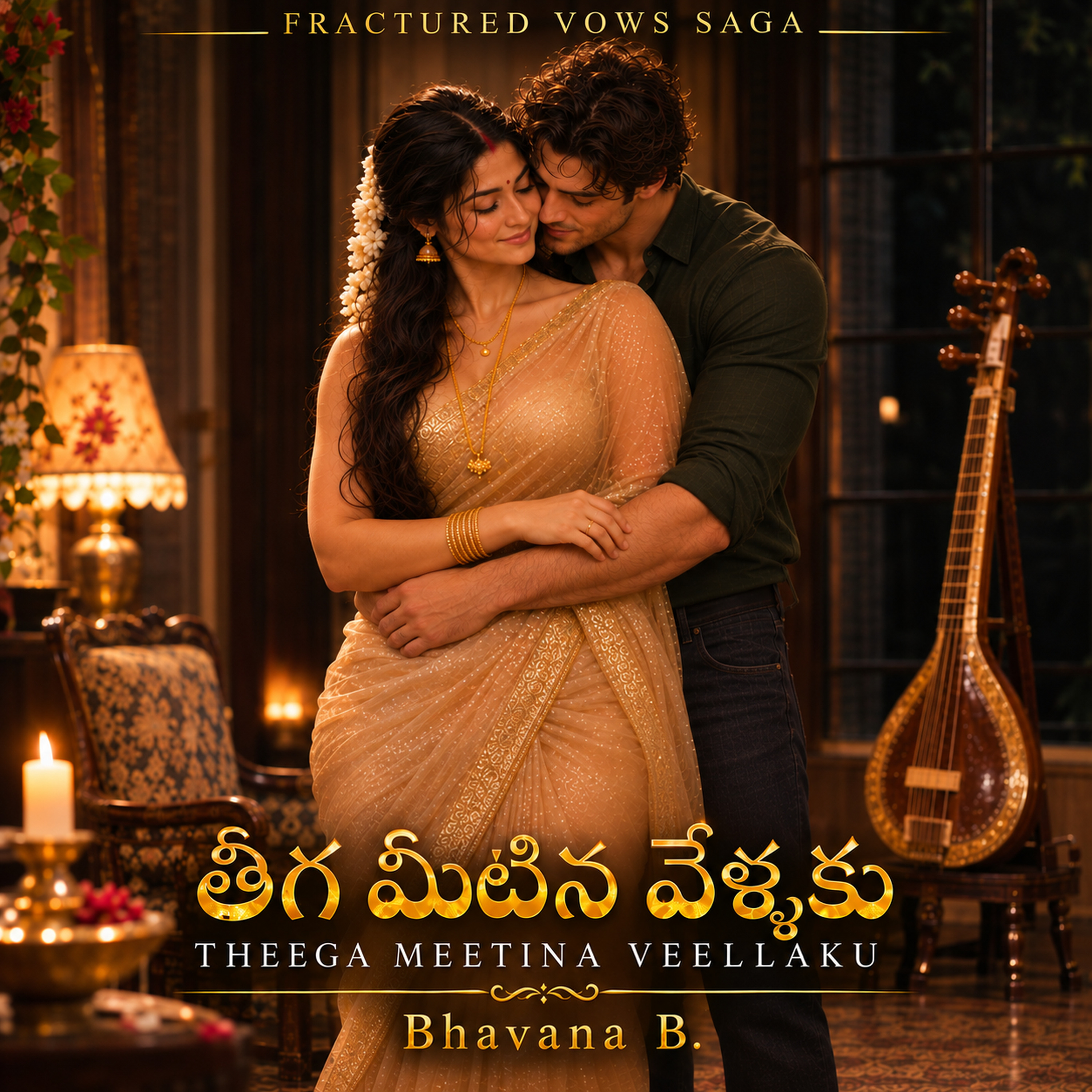
Theega Meetina Vellaku cover
TELUGU

తీగ మీటిన వేల్లుకు
Theega Meetina Vellaku

Tellavaarina veenaku thera kappinaaThough the veena was covered at daybreak
Theegalinkaa naa pere palukuthunnaayithe strings are still speaking my name
Kallu moosukunna kaluva nuvvuYou are a lily that has closed its eyes
Nee rekullo inkaa naa gaali thiruguthondiand my air is still moving inside your petals
Theega meetina vellaku entha sigguWhat shyness in the fingers that plucked the string
Paata paadina pedaviki entha maunamwhat silence in the lips that sang
Raagamanthaa nuvve ayinaaThough the whole raga was you
Nee maunam kooda entha madhurameven your silence is so sweet
Paadina gonthuku ae dosham ledeThere was no fault in the voice that sang
Palikina theegaku ae paapam ledeno sin in the string that answered
Shruthi nuvvu ichchaavu laya nenu pattaanuYou gave the pitch, I kept the rhythm
Aa sangeetham iddaridee iddarideThat music belonged to the two of us, to both
Adigi maree aalaapana theeyinchaavuYou asked and asked until I drew out the alapana
Ippudu okka aksharam kooda mingesthaavuNow you swallow even a single syllable
Thaalam thappakundaa nuvve nadipinchaavuYou are the one who kept it in time
Ippudu naa choopuku dorakkundaa daagaavuNow you have hidden where my eyes cannot find you
Ee gadilo inkaa aa swarame thiruguthondiThat note is still going round this room
Theesukovadam telisina theega ivvadam telisina swaramA string that knows how to take, a note that knows how to give
Aa rendoo oke gonthulo entha aruduHow rare it is to find both in one throat
Nee ammamma cheppina paatha maataThe old word your grandmother told you
Nee oopirilo ee roju paataindibecame a song in your breath today
Nee chevi pakkana naa oopiri inkaa shruthi chesthondiBeside your ear my breath is still tuning
Nee veli kosana naa gunde inkaa thaalam vesthondiat the tip of your finger my heart is still keeping time
Nuvvu daachedi naa gundeku telusuWhat you hide, my heart knows
Nenu cheppedi nee ontiki telusuWhat I say, your body knows
Pallavi paadeshaavu charanam migilundiYou have sung the pallavi. The charanam is still left
Inko paata inkaa migile undeThere is still one more song left
The line at the end

A whole song about a woman who was asked to sing and then stopped, and the last thing he notices is not hers. The old word your grandmother told you became a song in your breath today.

He is hearing a dead woman through a living one. Readers of the books will know which grandmother that is and what she said. Everyone else gets the better version, which is that somebody long ago told her something, and it is still coming out of her, and the man listening can hear it.

The song also refuses to end: you have sung the pallavi, the charanam is still left. There is still one more song.

✦

A last word

None of this was a plan. There was no decision to build a soundtrack on a Sanskrit epic. There was a teacher turning a page, a girl wondering what was on it, a translation found years later, and one night at a desk when an old poet turned up uninvited while somebody was trying to describe a woman crossing a lecture hall.

What he gave was not a set of images to copy. It was permission. Describe her from the feet up. Take the whole canto. Do not stop at the eighth.

If you came here for the poem, the songs are above and they are free to hear. If you came here for the songs, the poem is fifteen hundred years old, it is better than anything on this page, and most of it is a few clicks away in translation. Go and read it. Start at Canto One, where a girl is born in the mountains and a sage looks at her and says, this one will have him.

Where the Sanskrit on this page comes from

Every verse quoted here was taken from a published text, not from memory. Kumarasambhavam Canto 1 verses and commentary from the Giirvaani edition at sanskritdocuments.org. Canto 8 verse 91 from the Nirnaya Sagar 1955 edition at Sanskrit Wikisource. Canto 3 and Canto 5 from the Kamakoti Kumarasambhavam series. Ramayana Bala Kanda 1.10 from enjoylearningsanskrit.com. Background on the poem, its disputed later cantos and the arguments over Canto 8 from the Wikipedia article on Kumarasambhava. Biographical material on Mirabai, including which parts are legend, from the Wikipedia article on Mirabai.

Where a verse could not be confirmed from a source, the page says so rather than quoting it. Where a song varies from the poem, the page says that too.
🎵 THE FULL SOUNDTRACK 📖 THE FRACTURED VOWS SAGA ✦ ALL THE ANCIENT LORE 👑 THE RING IN THE FISH
✦ FIND ME
INSTAGRAM FACEBOOK YOUTUBE TIKTOK LINKEDIN X GOODREADS WHATSAPP NEWSLETTER